Weak lensing catalogue and image simulations
UNIONS-3500 Weak Lensing, Rencontres de Moriond 2026, La Thuile
March 27, 2026
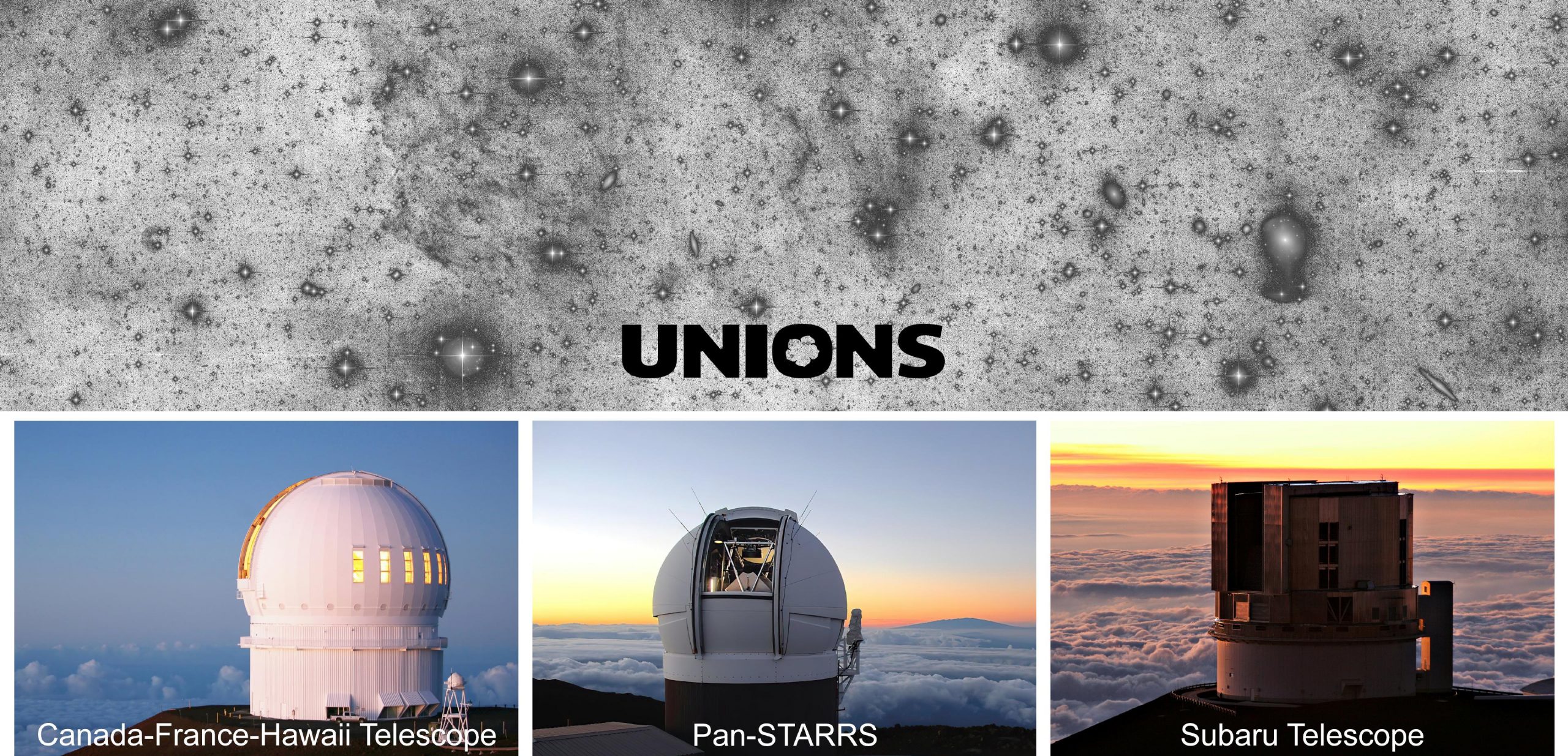
The Ultraviolet Near-Infrared Optical Northern Survey (UNIONS, Gwyn et al., 2025)
\(r\), \(u\) bands
\(i\) band
\(g\), \(z\) bands
Euclid photometry in the North
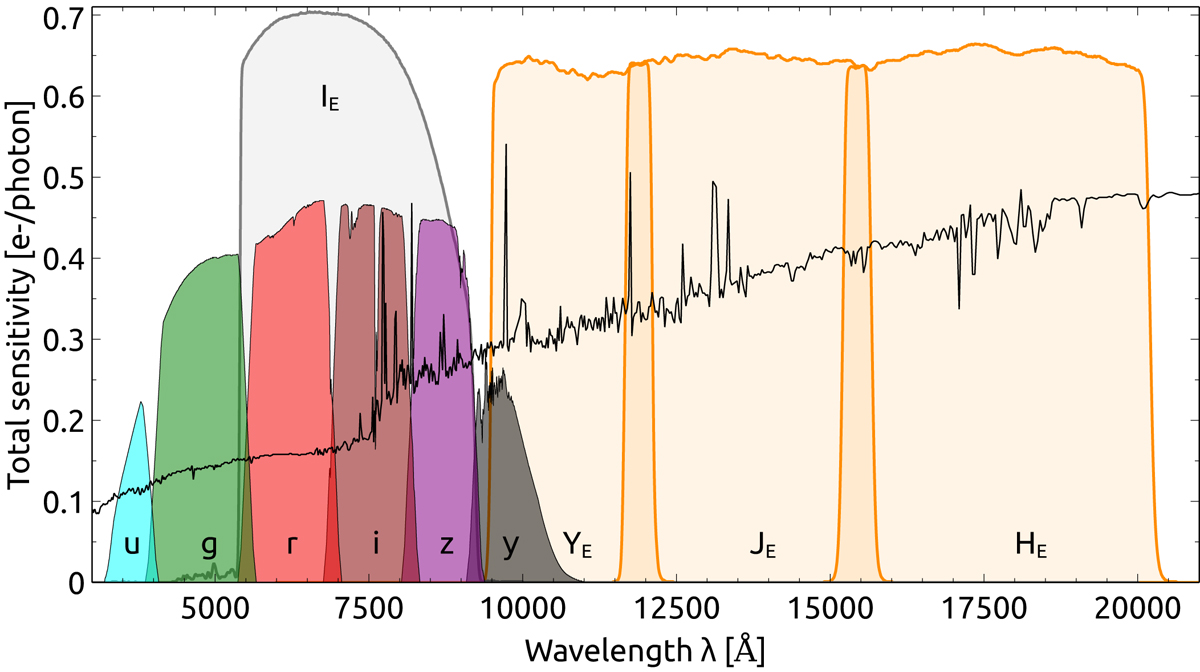
An excellent photometry
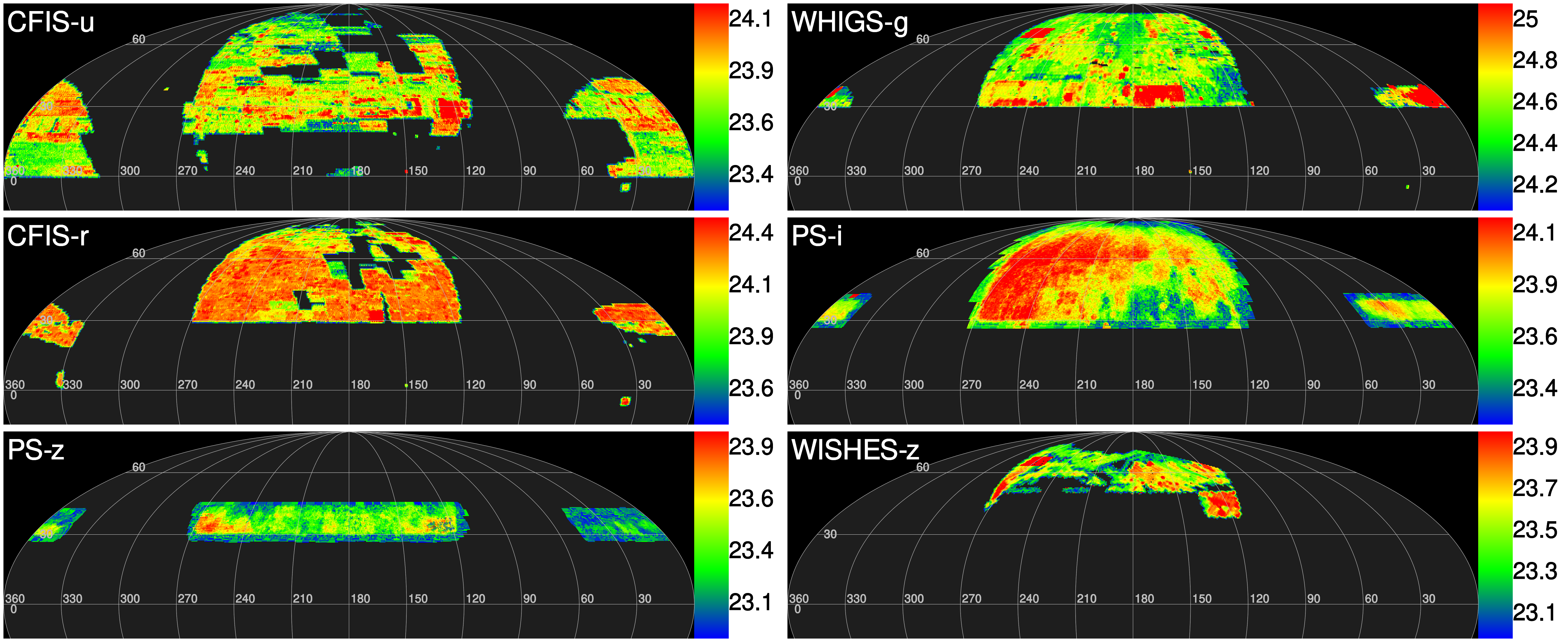
Depth of the photometric bands (Gwyn et al., 2025)
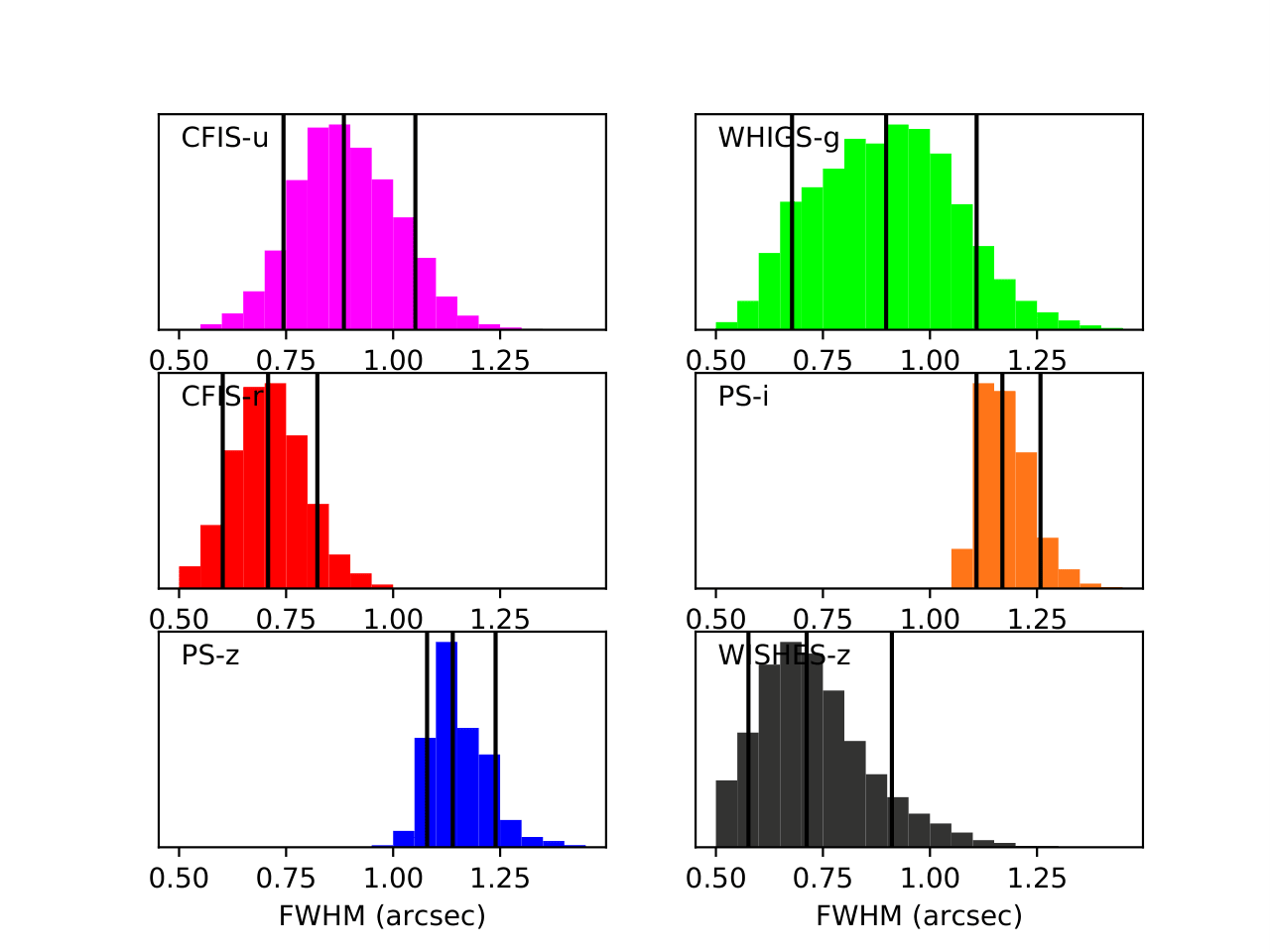
FWHM in the \(r\)-band: \(\sim 0.7"\) (DES: \(\sim 0.98"\))
Outline of the talk
- Selection and weak lensing sample properties
- Systematic tests and mitigation strategy
- Image simulations and shear bias calibration
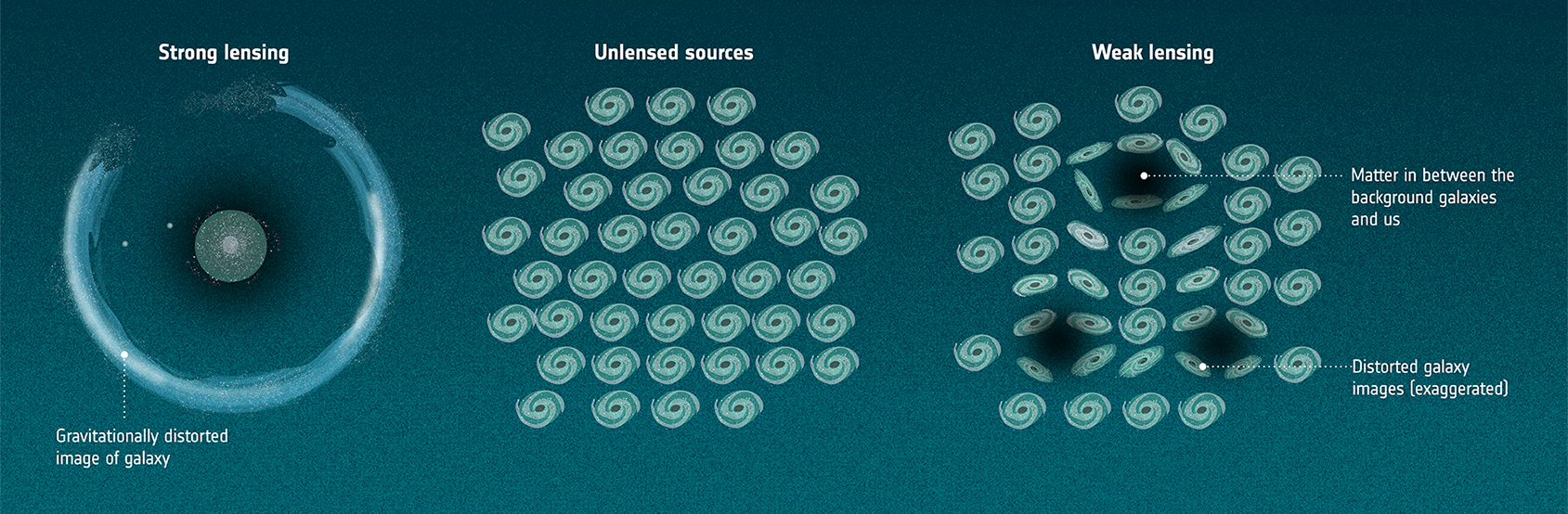
- Weak-lensing science with UNIONS
1. Selection and weak lensing sample properties
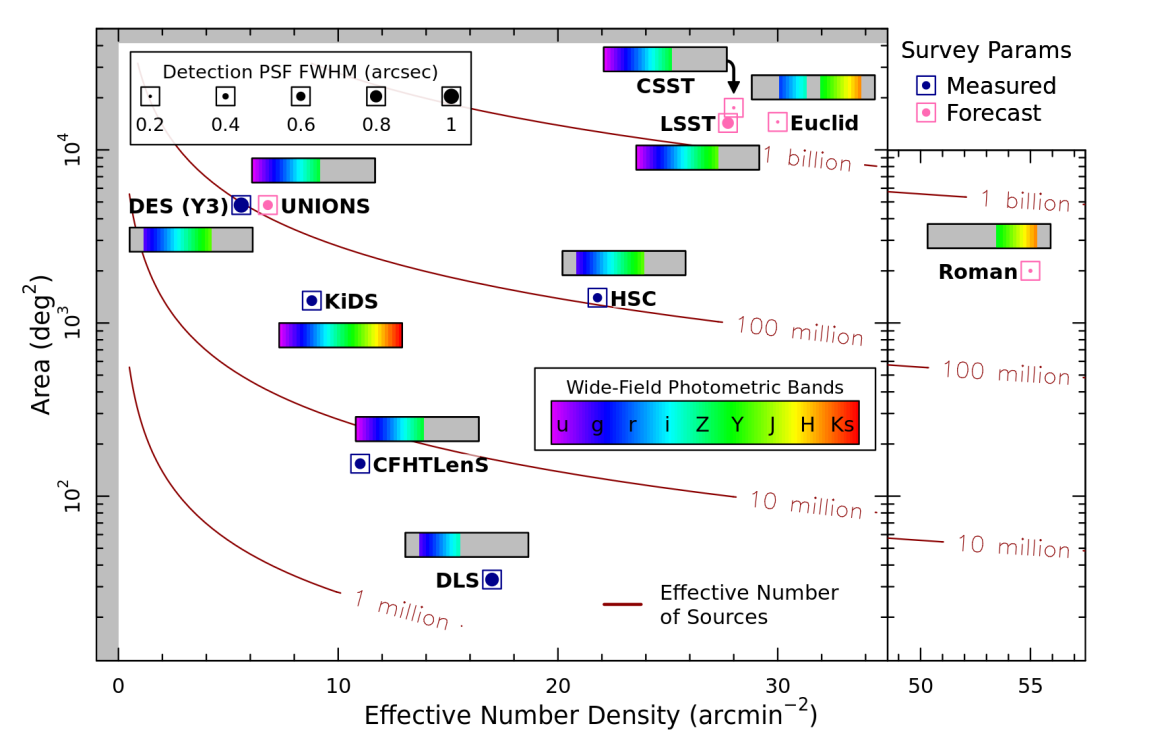
Technical specifications of UNIONS:
- Target area: \(\sim 6,250\) deg\(^2\)
- Current area: \(\sim 3,500\) deg\(^2\)
- Depth: \(24.5\) (\(r\)-band)
- Seeing: \(\sim 0.7"\) (\(r\)-band)
- Shape measurement only in the \(r\)-band
- Image reduction with MegaPipe (Gwyn+2008)
- Shape processing with ShapePipe (Farrens+2022)
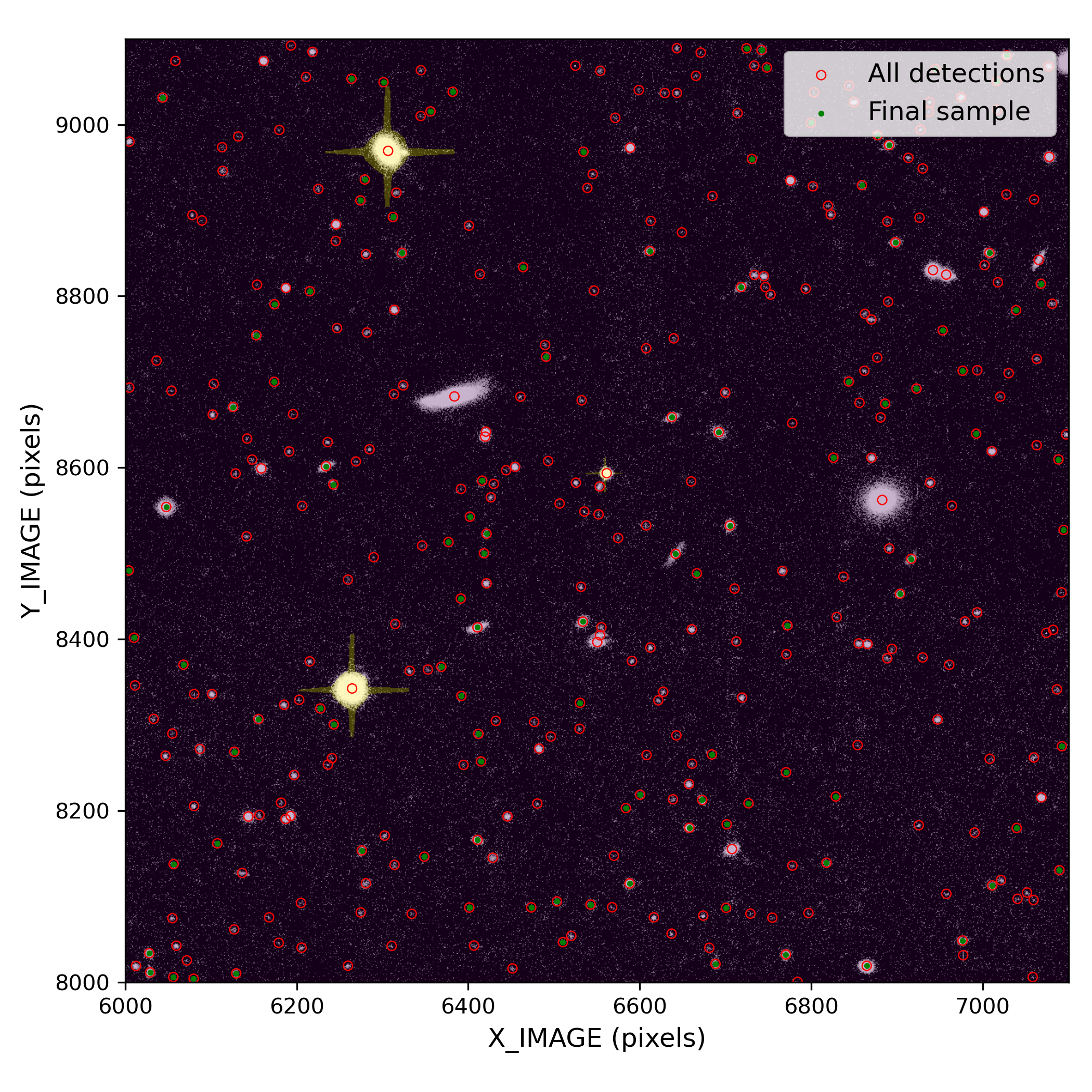
1. Source detection
- Source detection with SExtractor (Bertin & Arnouts, 1996) at the tile level
- PSF modeling with PSFEx (Bertin, 2011)
- Shape measurement with ngmix (Sheldon, 2014)
- Very conservative detection process
1. Masking
3 steps of masking:
- Pre-processing (MegaCam)
- chip defects
- cosmic rays
- ShapePipe masks
- Blended objects
- Bright stars
- Messier or NGC objects
- ngmix quality flags
- others…
- Post-processing (manual, maximask Paillassa+2020)
- remaining bright star haloes
- satellite trails
- number of pointings/exposures
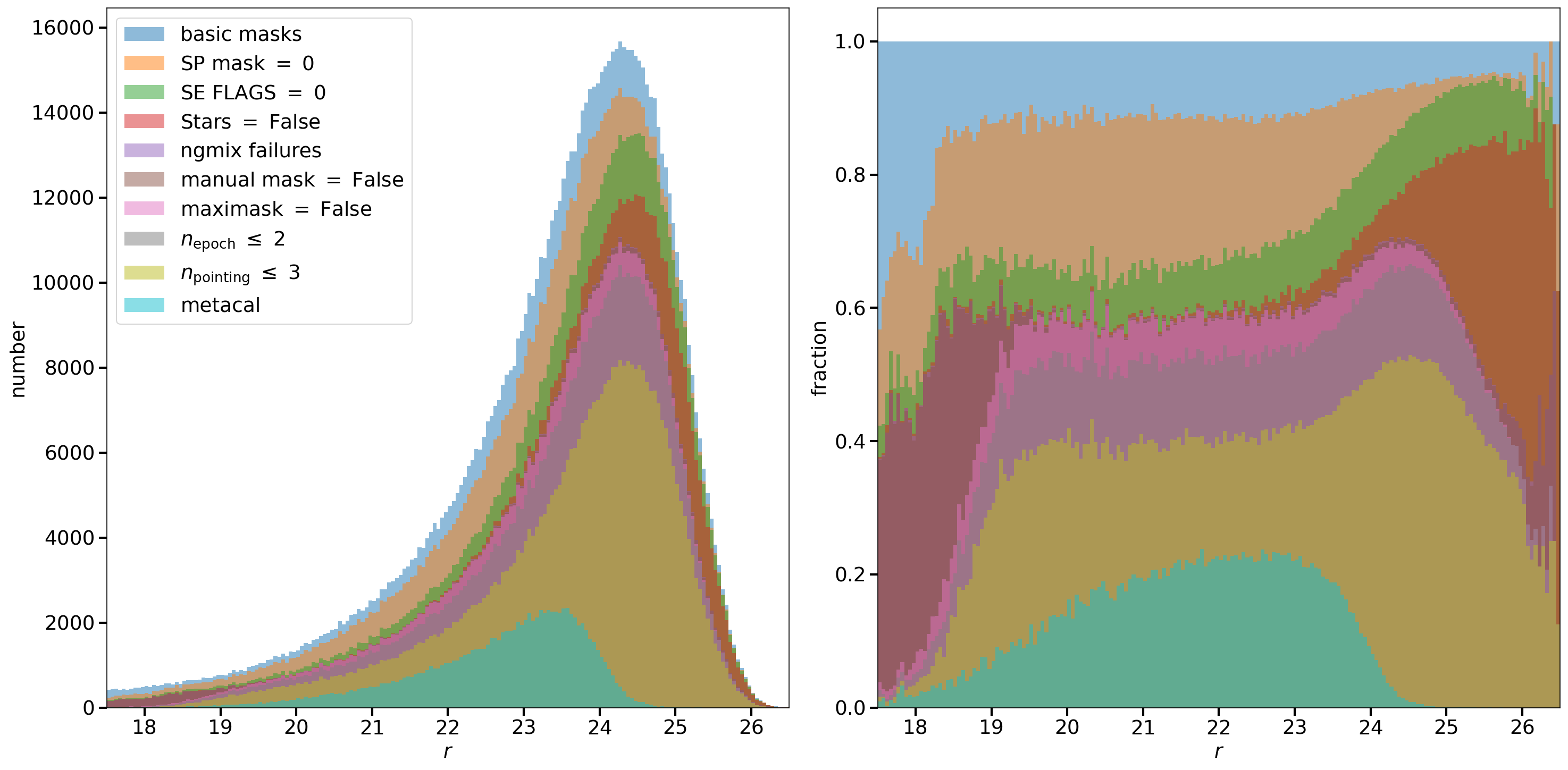
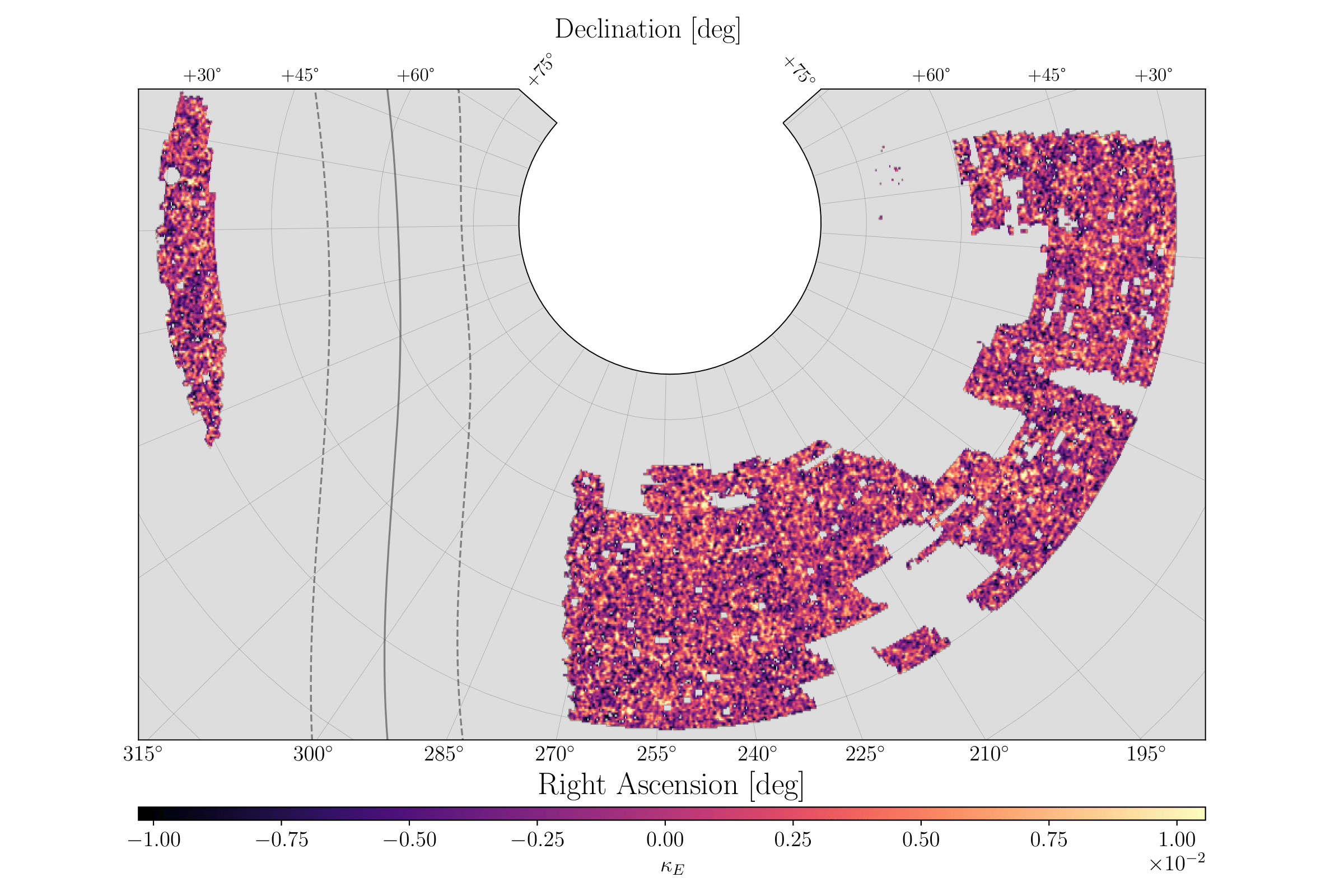
Only keep \(\sim 25 \%\) of the detected objects. Reduces the \(3,500 \textrm{deg}^2\) imaging area to an effective footprint of \(2,894 \textrm{deg}^2\).
1. Weak lensing sample properties
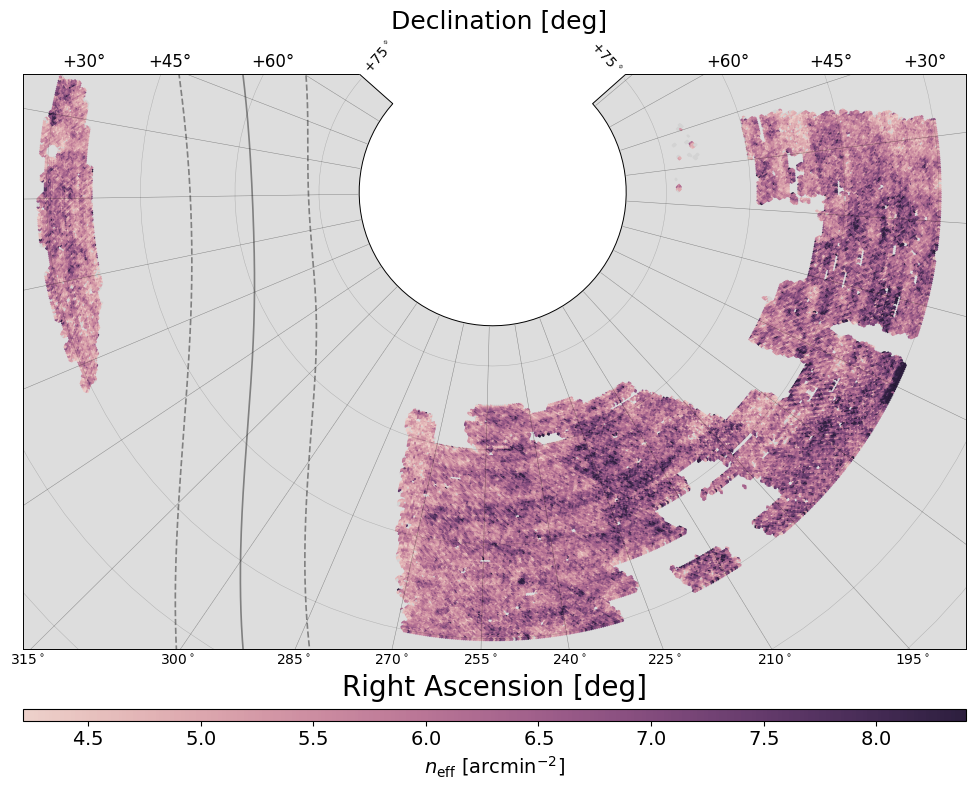
- Number of galaxies: \(N_{\rm gal} = 61,378,891\)
- Effective area: \(A_{\rm eff} = 2,894 \textrm{deg}^2\)
- Effective number density: \(n_{\rm eff} = 5.09\) galaxies per arcmin\(^2\)
- Shape noise per component: \(\sigma_{\rm e} = 0.27\)
2. Systematic tests and mitigation strategy
2. Calibrating biases
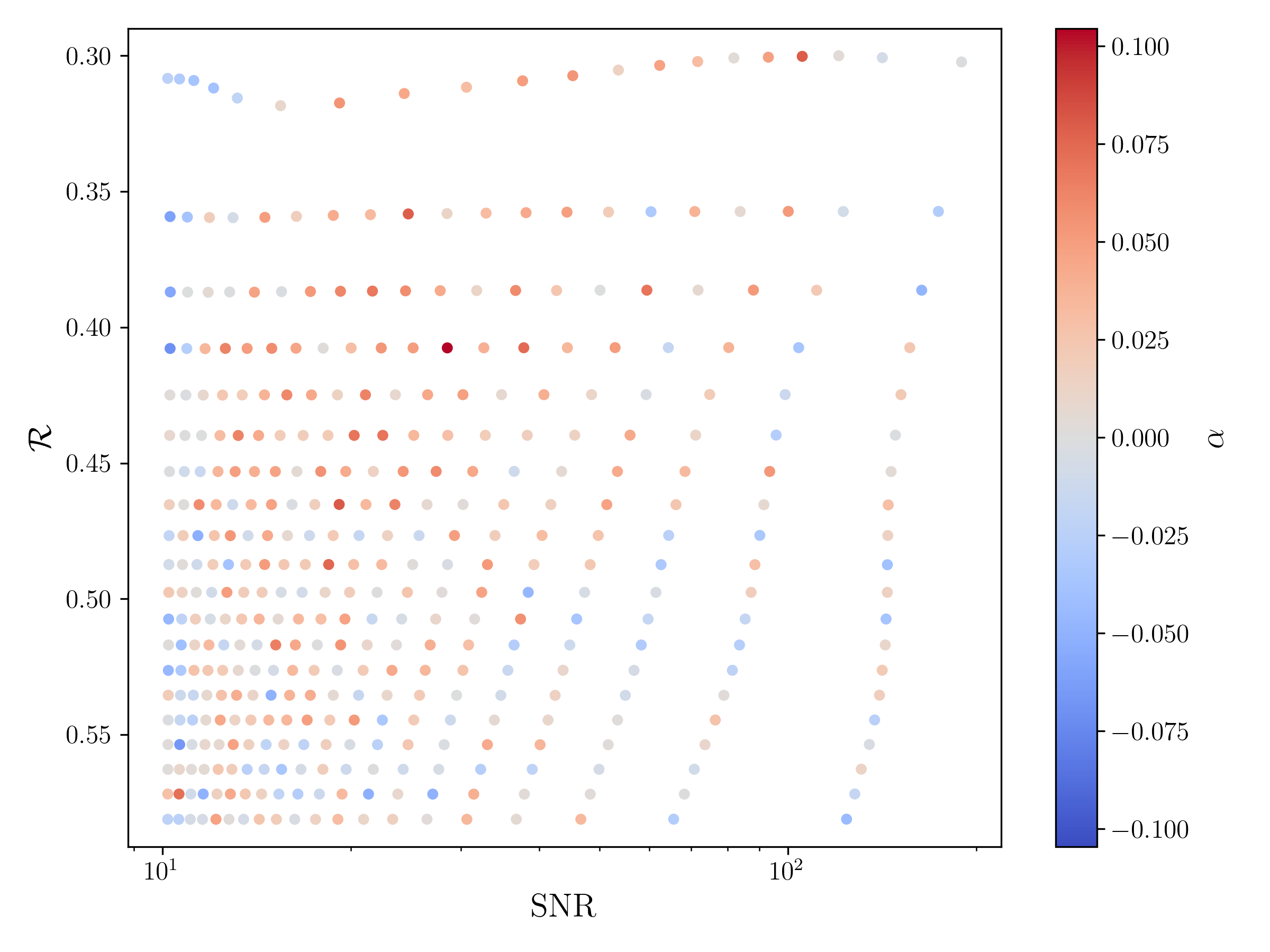
Point spread function (PSF) error model: \(\delta \boldsymbol{e}^\mathrm{sys}_\mathrm{PSF} = \alpha \underbrace{\boldsymbol{e}_\mathrm{PSF}}_{\text{Leakage}} + \beta \underbrace{(\boldsymbol{e}_* - \boldsymbol{e}_\mathrm{PSF})}_{\text{Ellipticity error}} + \eta \underbrace{\boldsymbol{e}_\mathrm{PSF} \left(\frac{T_* - T_\mathrm{PSF}}{T_*} \right)}_{\text{Size error}}\).
\(\alpha\), \(\beta\) and \(\eta\) free parameters.
Estimate leakage in bins of size ratio and SNR doing linear regressions.
Subtract the contribution in each objects ellipticity from PSF leakage.
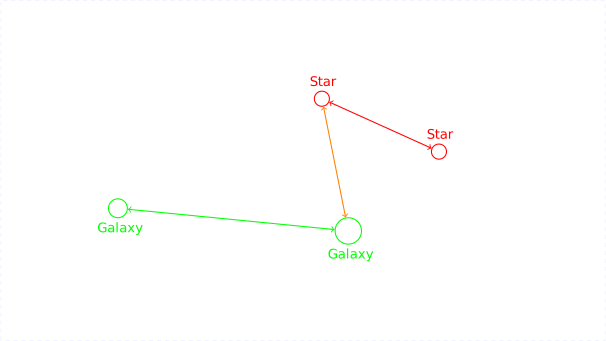
2. Galaxy-PSF cross-correlations (Guerrini+2025)
Galaxy-Star correlations: \(\tau_0(\vartheta) = \langle e^\mathrm{obs} e^\mathrm{PSF} \rangle(\vartheta)\), \(\tau_2(\vartheta) = \langle e^\mathrm{obs} \delta e^\mathrm{PSF} \rangle(\vartheta)\), \(\tau_5(\vartheta) = \langle e^\mathrm{obs} \delta T^\mathrm{PSF} \rangle(\vartheta)\)
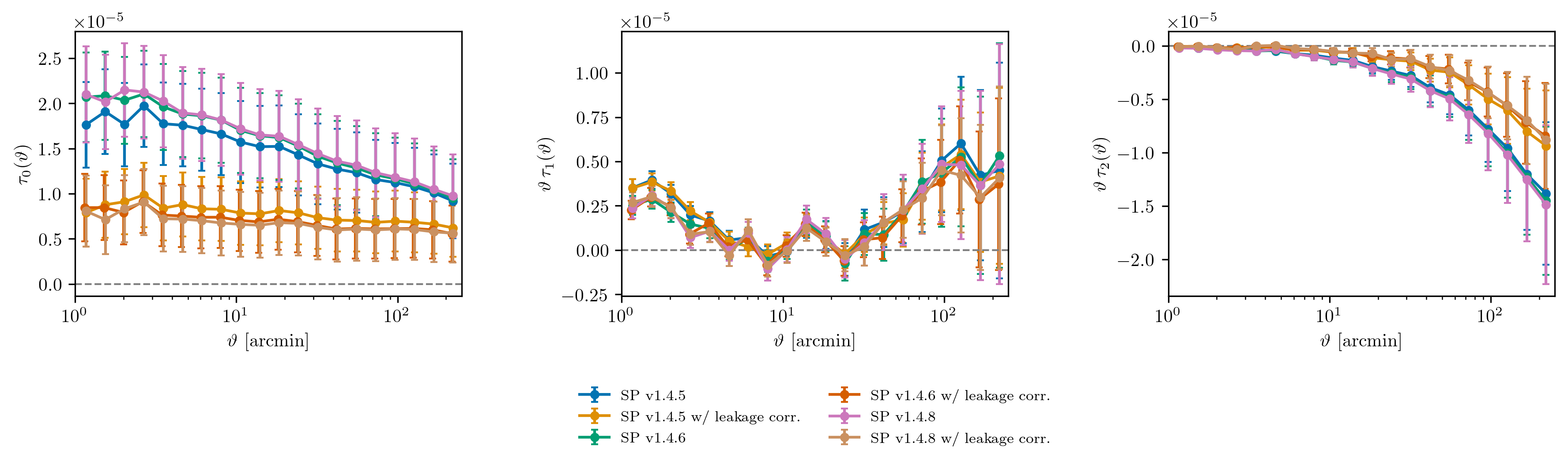
2. Galaxy-PSF cross-correlations (Guerrini+2025)
Galaxy-PSF correlation helps to:
- Select our weak lensing sample
- Choose scale cuts for the inference
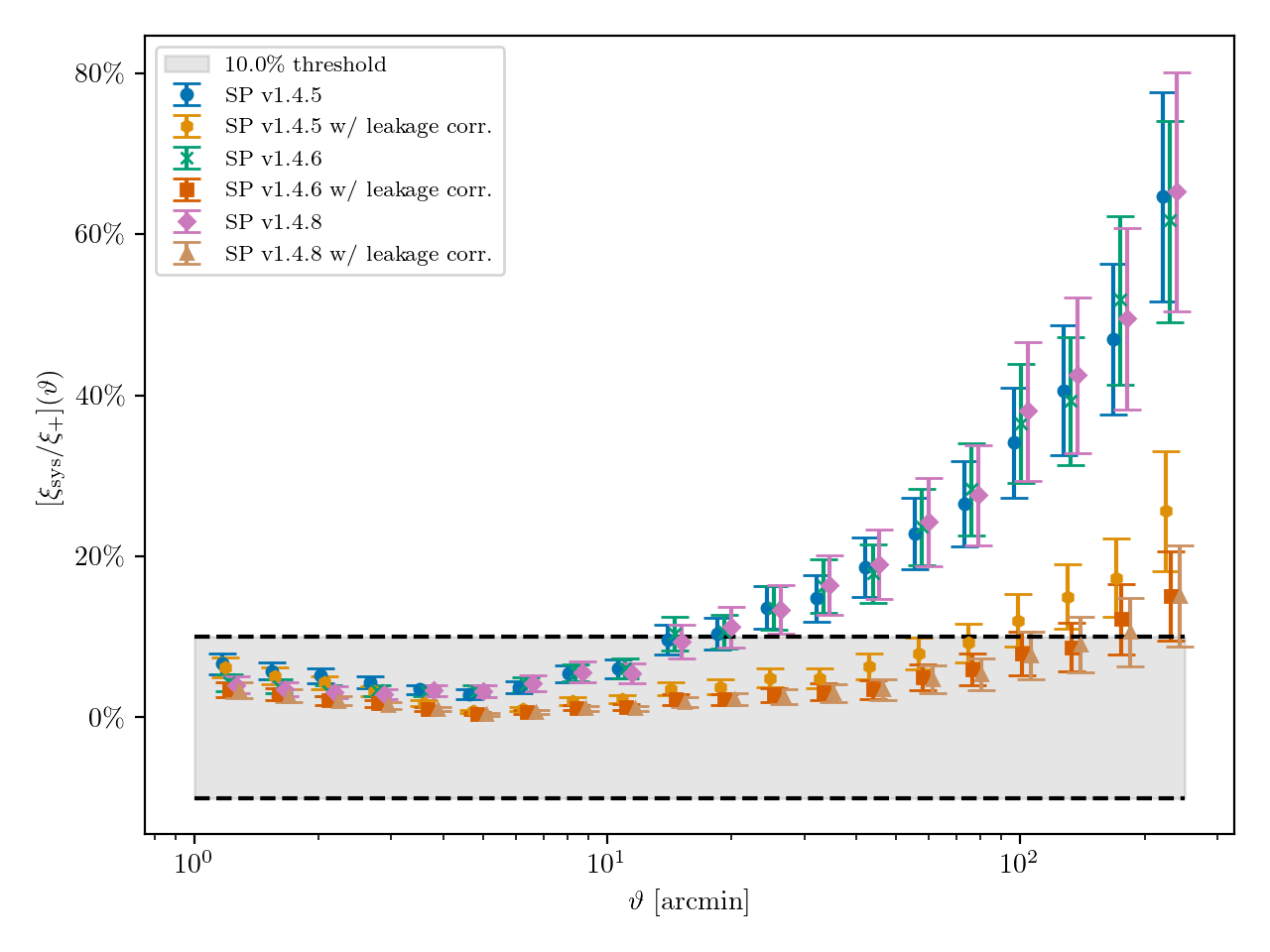
\[ \xi_\mathrm{sys}(\vartheta) = \alpha \tau_0(\vartheta) + \beta \tau_2(\vartheta) + \eta \tau_5(\vartheta) \]
2. Other systematics check
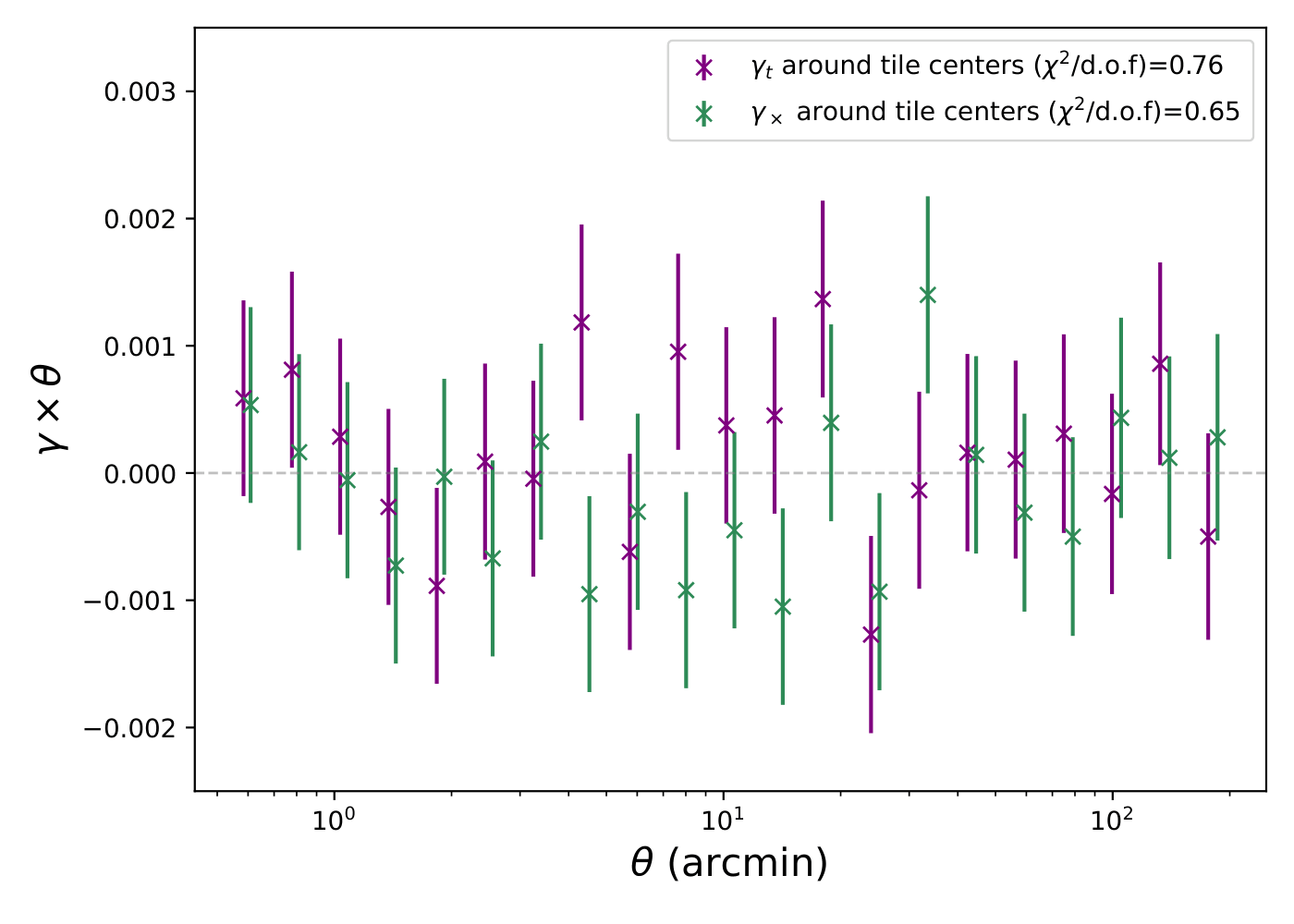
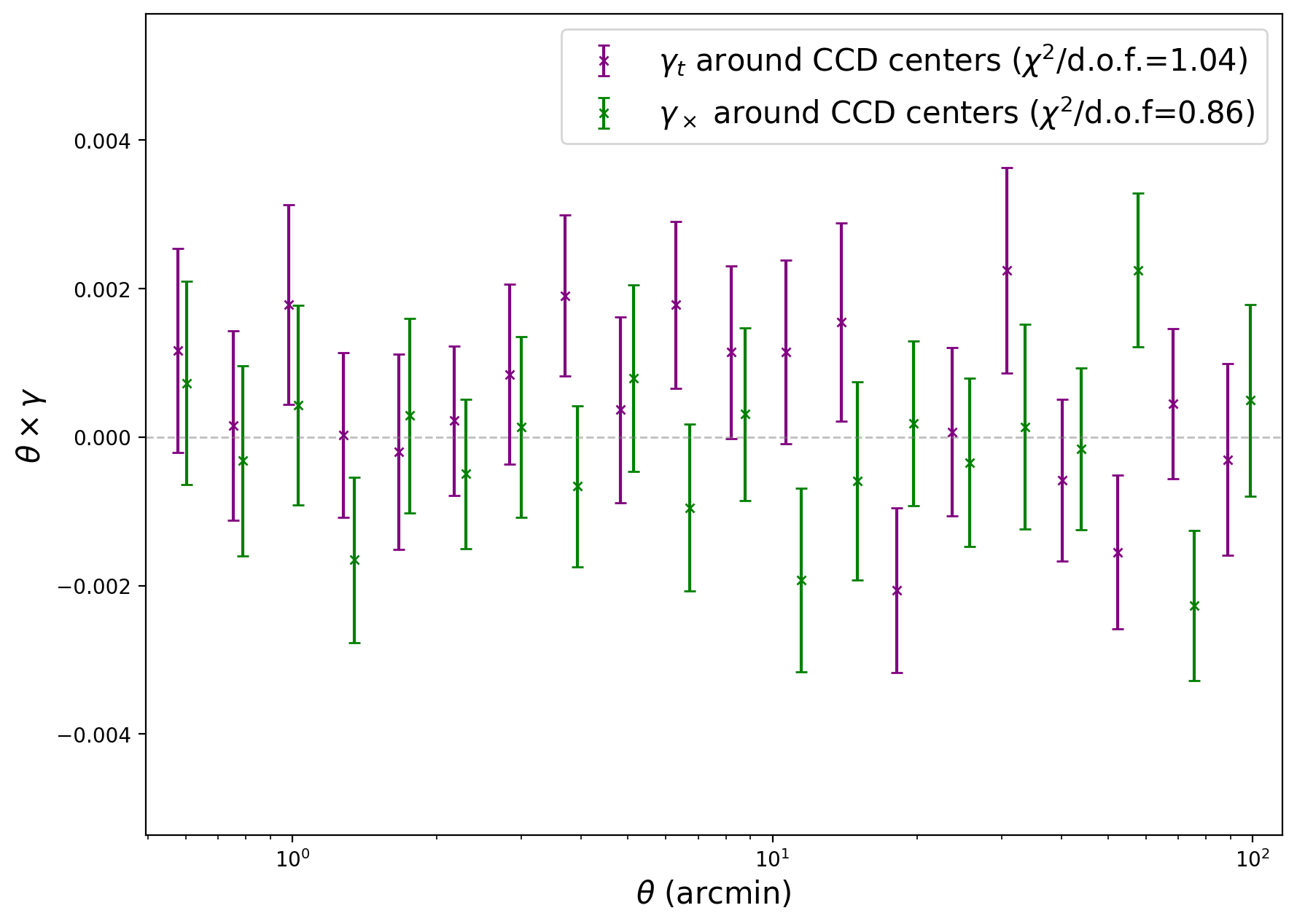
No significant correlation of shapes around CCD and tile centers.
2. Other systematics check
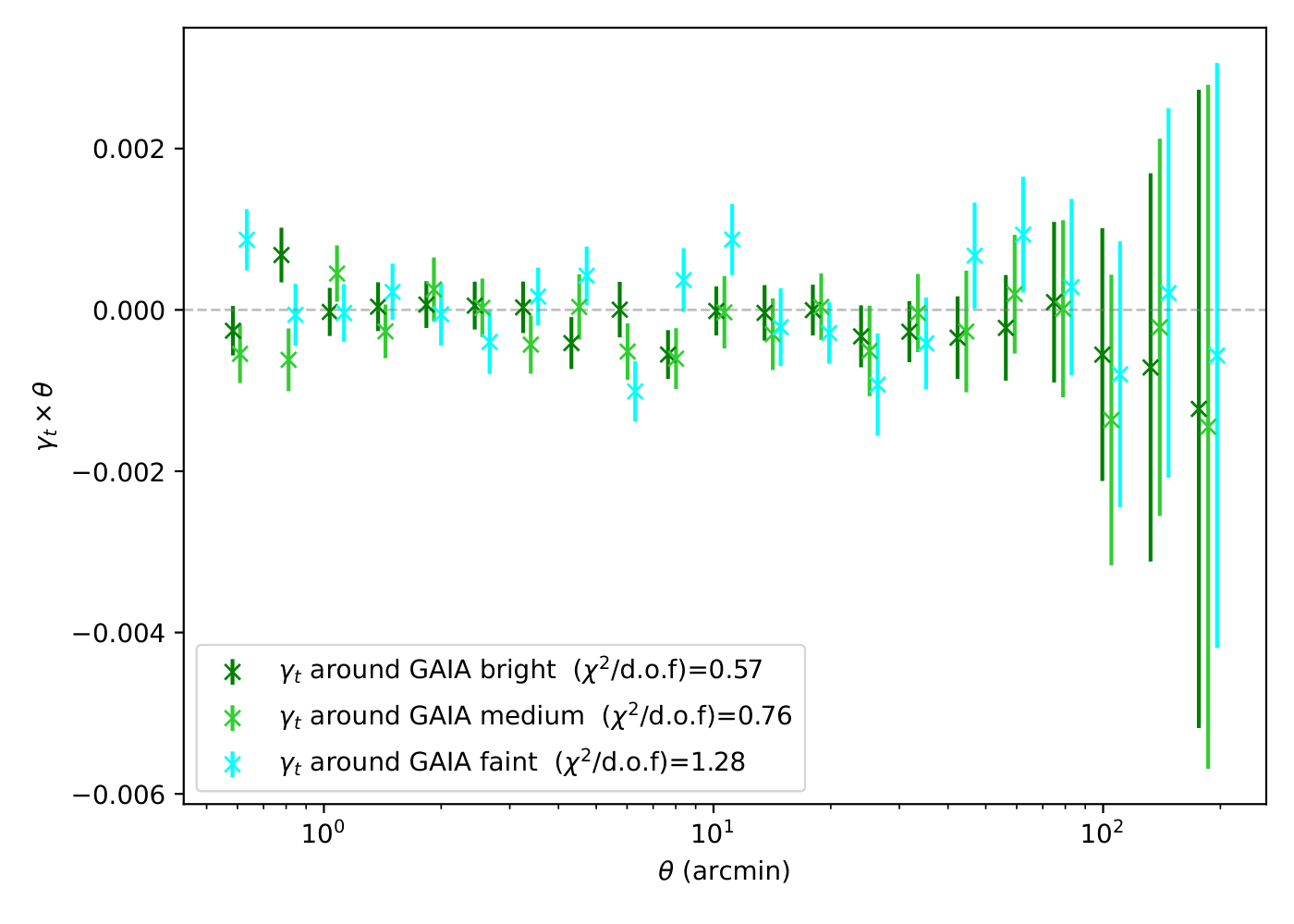
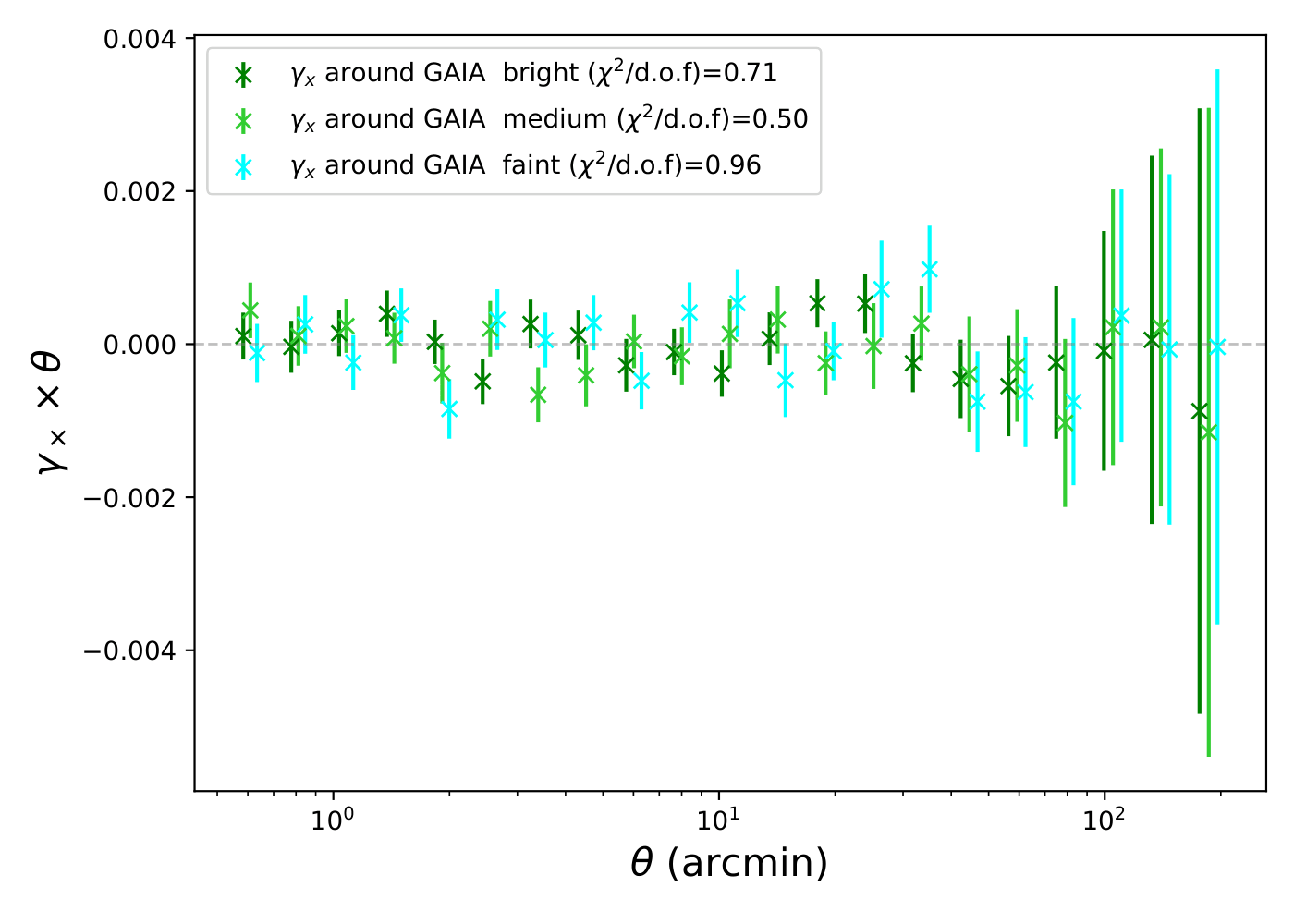
No significant correlation of shapes around Gaia stars.
3. Image simulations and shear bias calibration
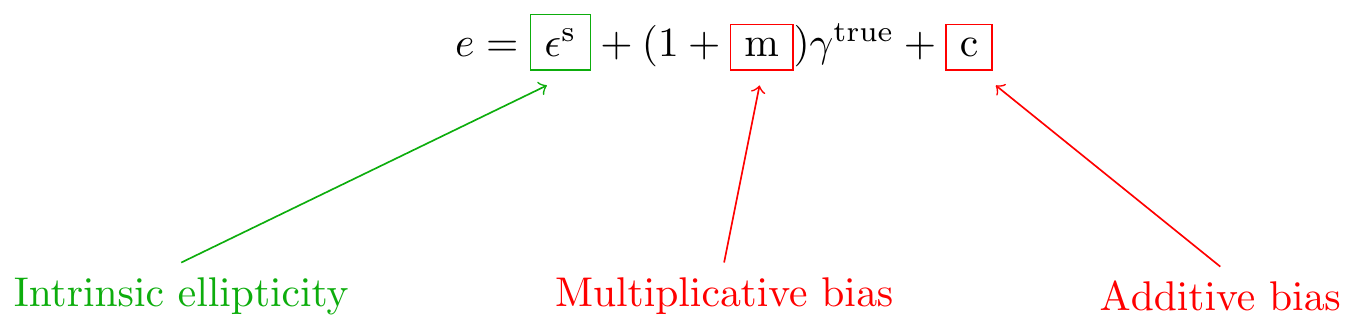
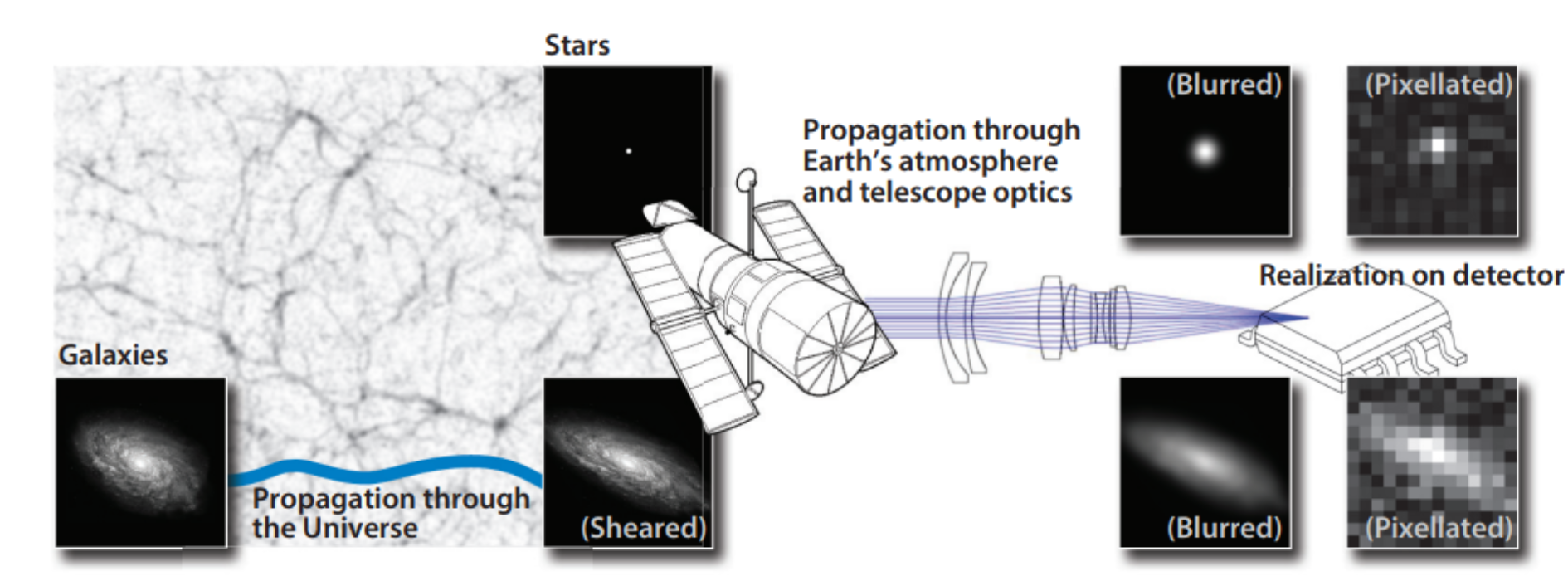
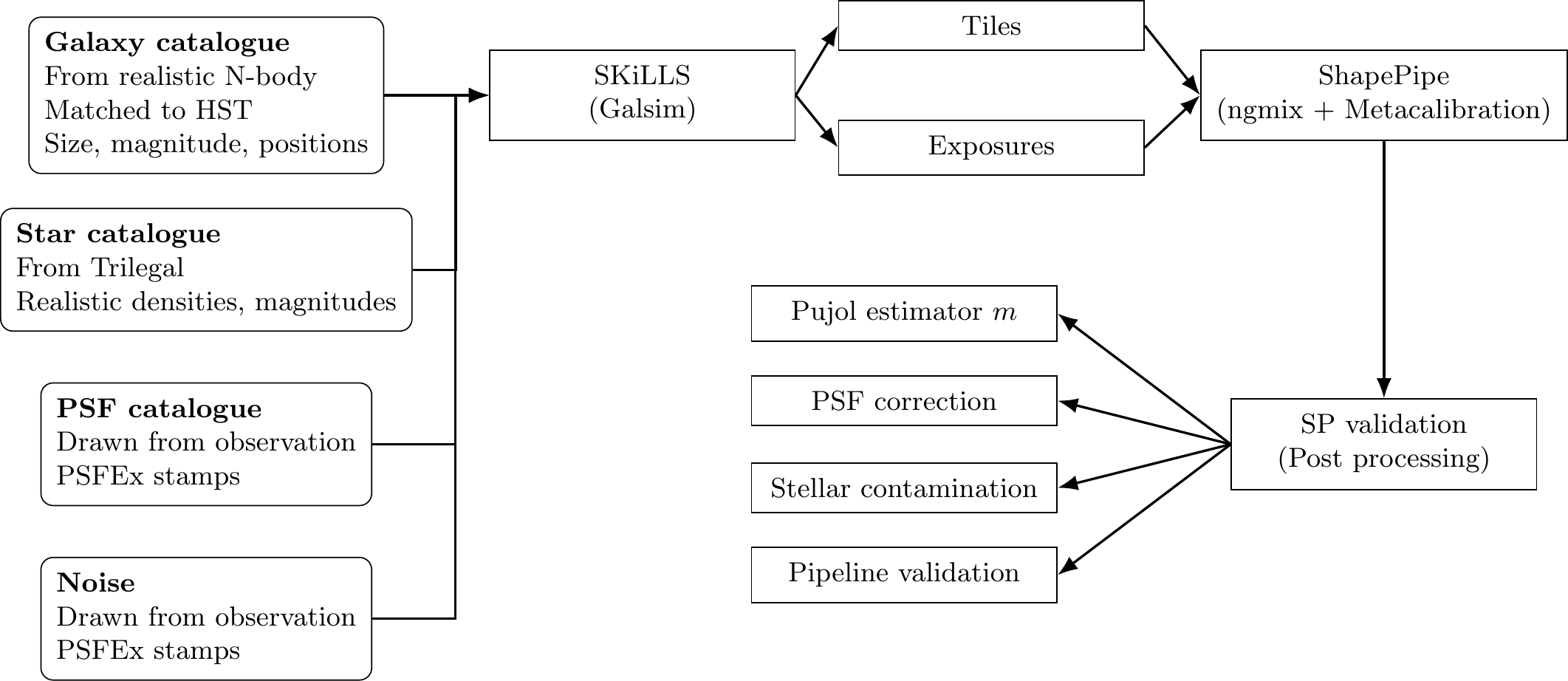
Multiplicative bias origin:
- Model bias
- Noise bias
- Selection effect
- Blending (not accounted for by Metacalibration)
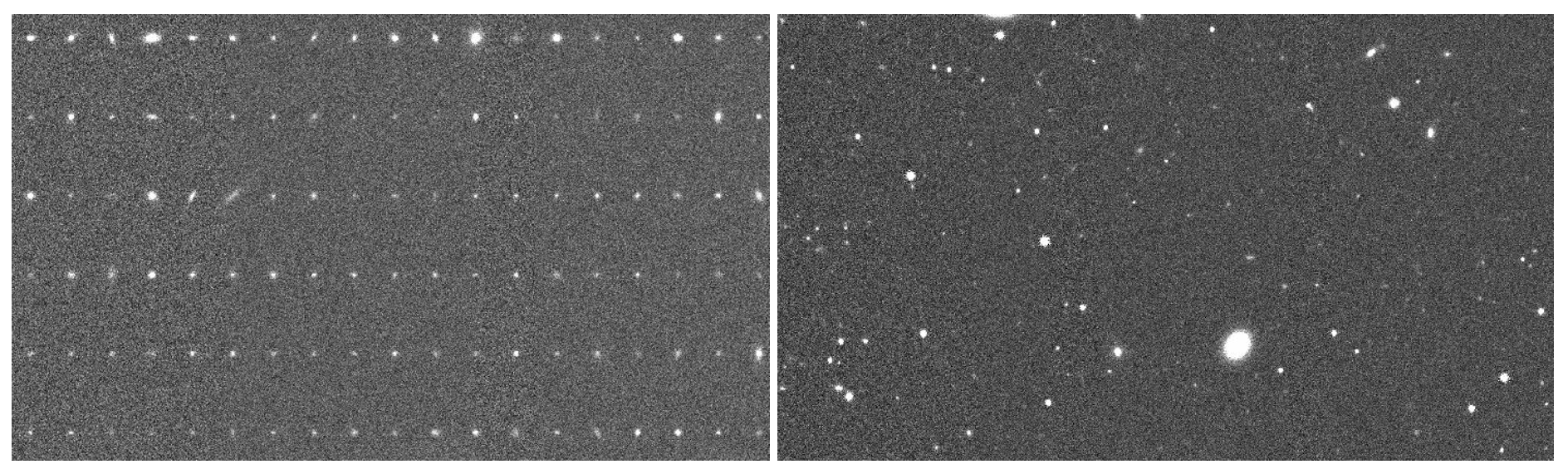
Image simulations on a grid (left) and with realistic positions (right). Credit: F. Hervas-Peters
3. Image simulations
3. \(m\)-bias estimations
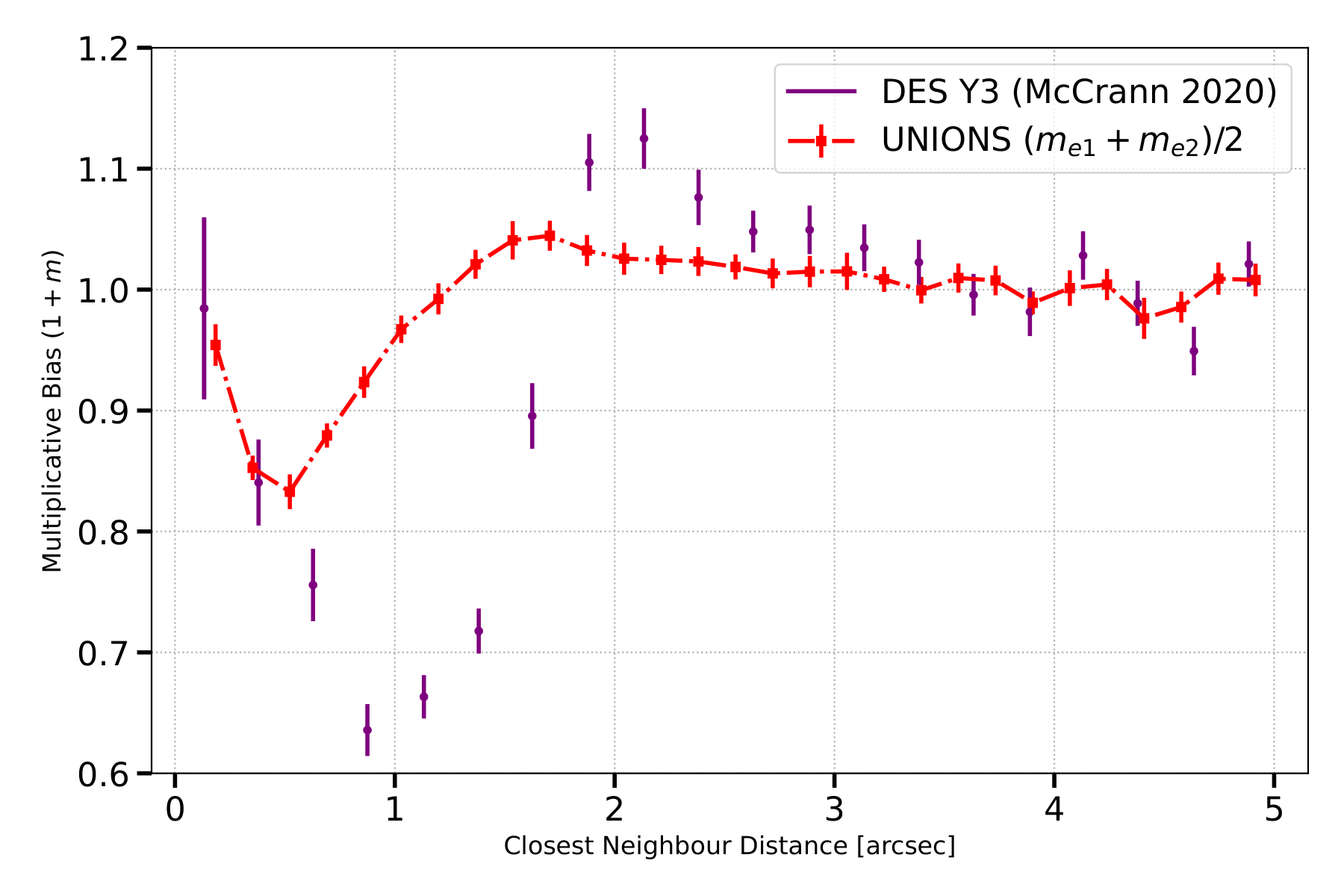
- Estimation of the multiplicative bias with respect to nearest neighbour distance in the input catalogue.
- We can see the improved seeing of UNIONS compared to DES.
- FWHM:
- UNIONS: \(\sim 0.7"\)
- DES: \(\sim 0.98"\)
3. \(m\)-bias estimations
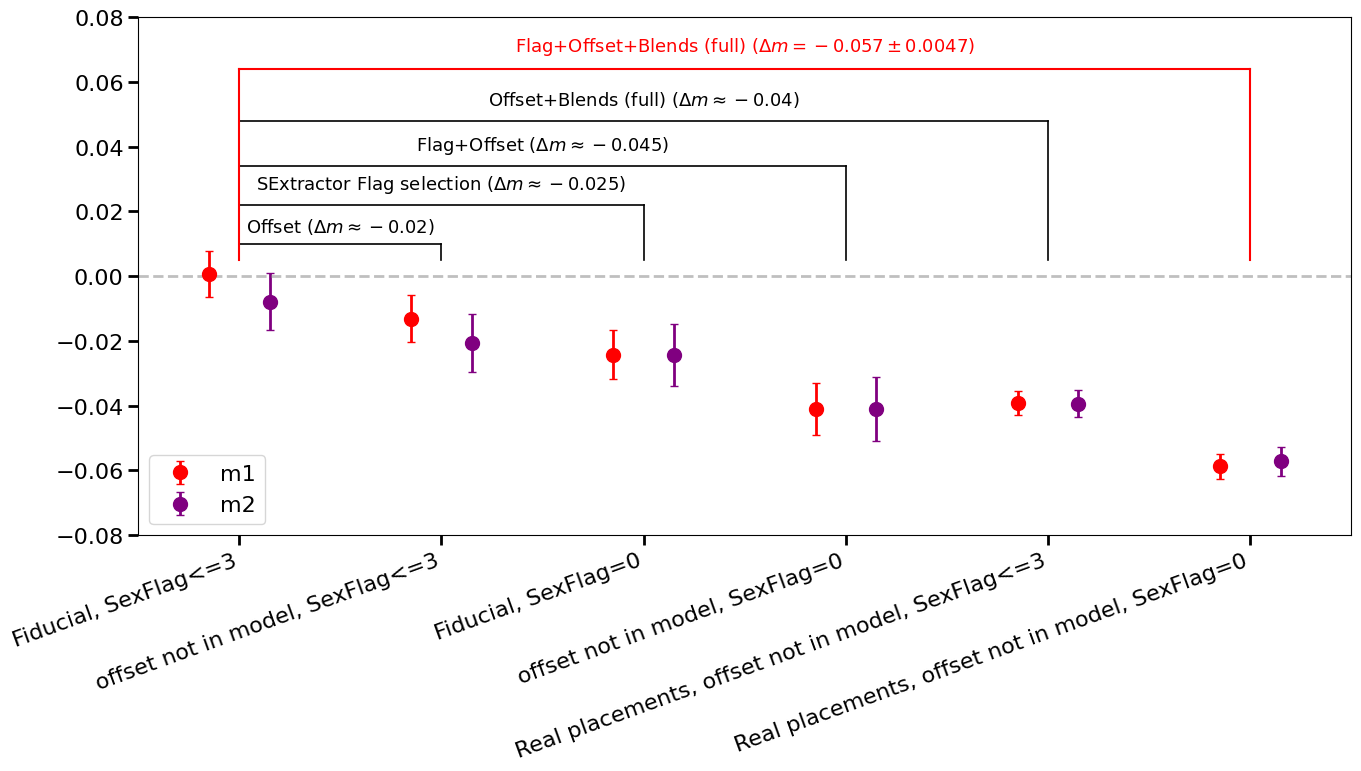
- Evolution of the \(m\)-bias with selection effects, offset bug in the pipeline, and realistic positionning.
4. Weak-lensing science with UNIONS
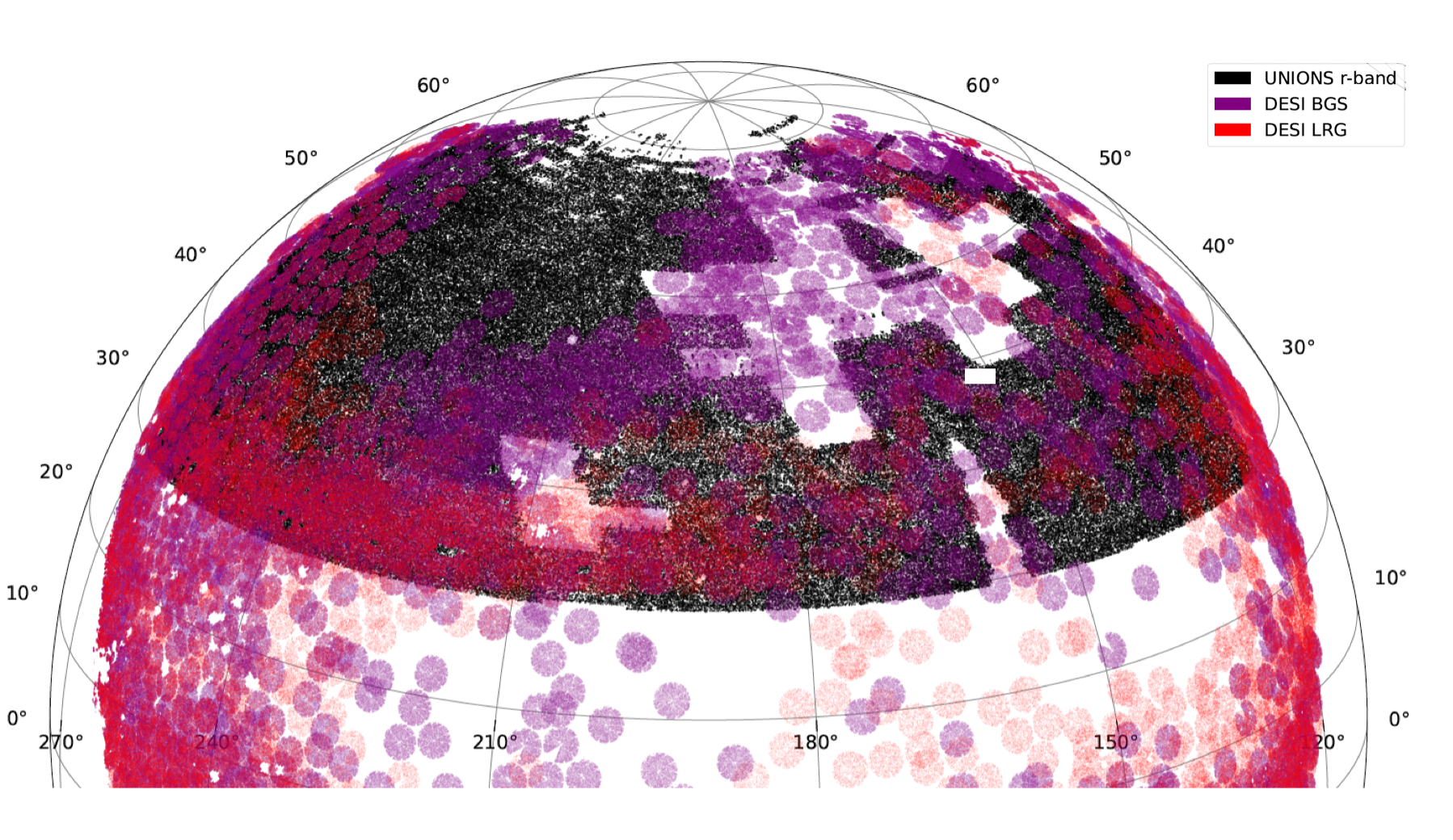
- UNIONS has a unique overlap with spectroscopic surveys.
- Opens exciting opportunities for cosmic shear and galaxy-galaxy lensing analyses with DESI.
4. Intrinsic Alignment of galaxies
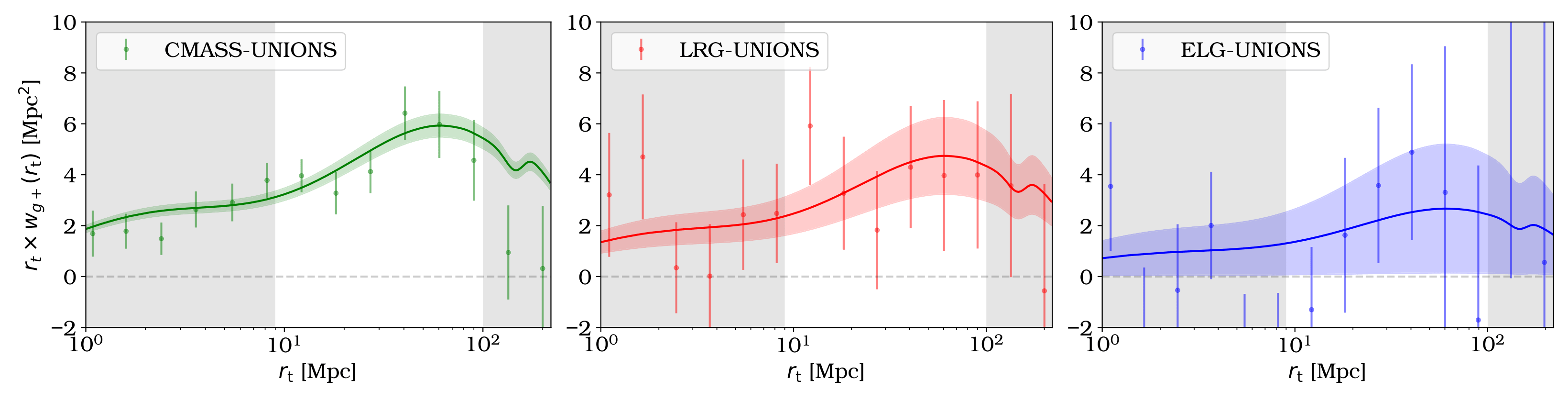
- Strong detection of intrinsic alignment with SDSS CMASS and LRGs
- Direct measurement used in the cosmological analysis (see Cail’s talk)
- More intrinsic alignment studies in preparation (see Calum’s talk)
4. Cluster lensing
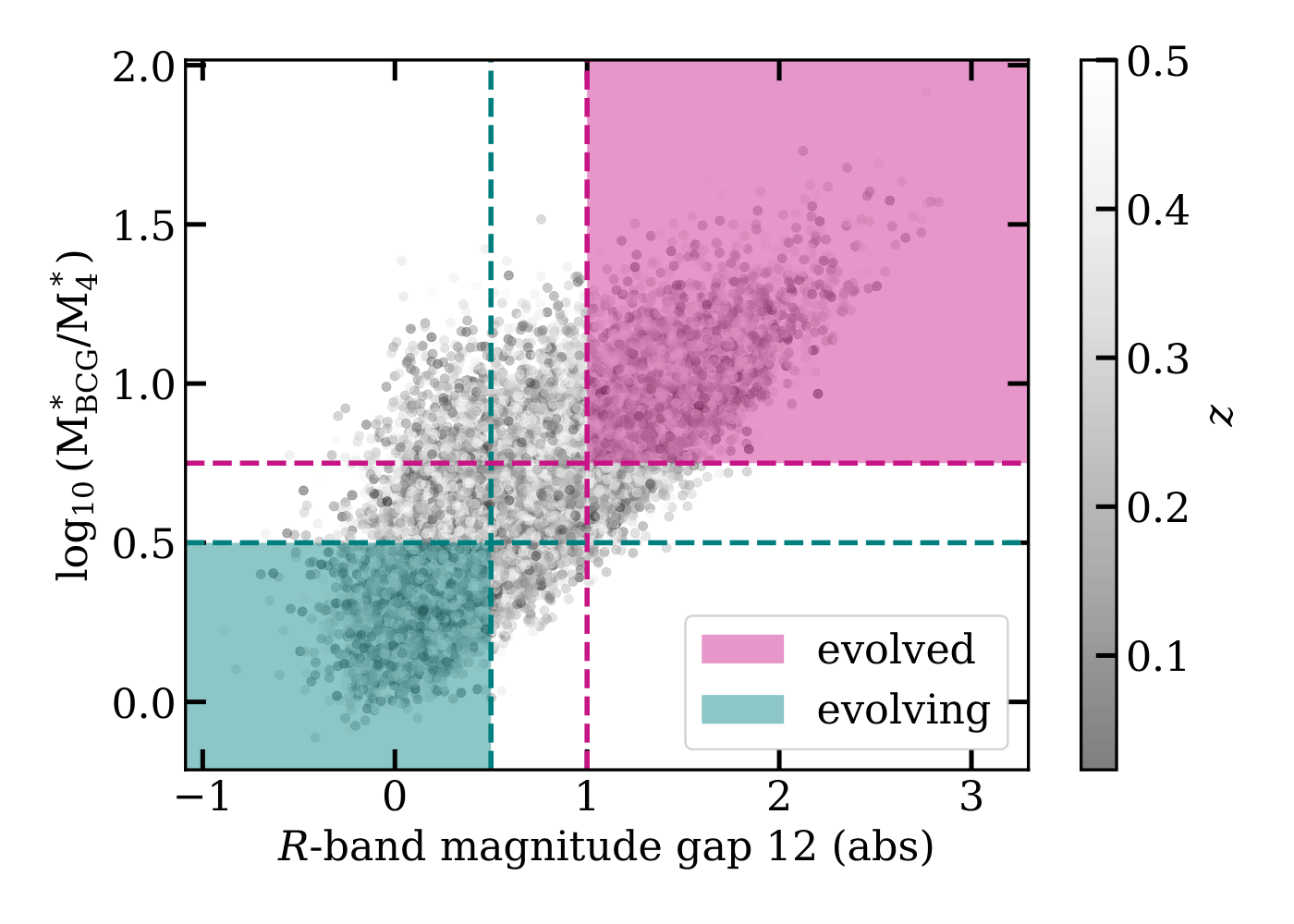
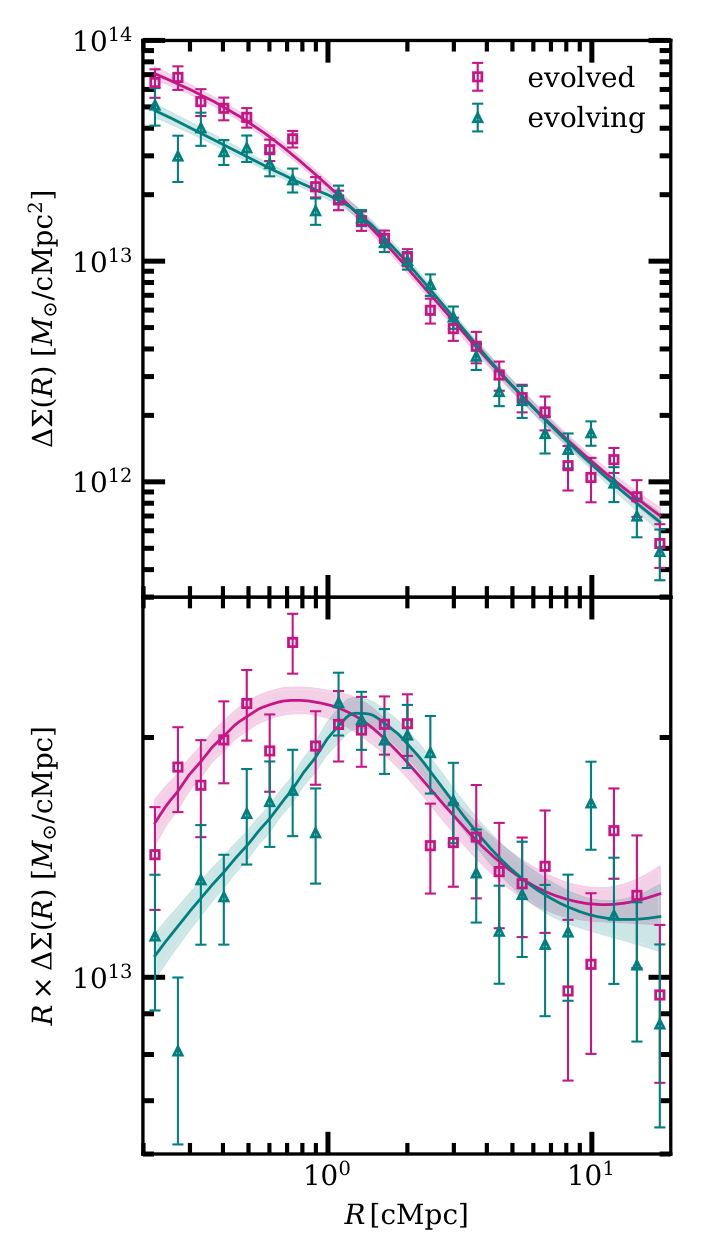
- Cluster selection using DLIS + DESI DR1 spectroscopic redshifts.
- Lensing signal is obtained from UNIONS weak lensing catalog.
- Selection of evolved and evolving clusters.
4. Void lensing
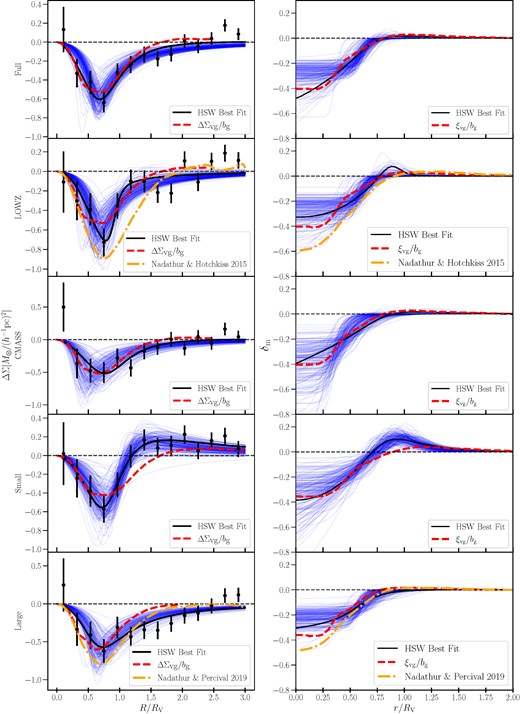
- Void lensing using BOSS foreground lenses and UNIONS background sources.
- \(6.2 \, \sigma\) detection of void lensing.
- Galaxy bias relative to underdense regions, \(b_{\rm g} = 2.45 \pm 0.36\)
Backup slides: star selection
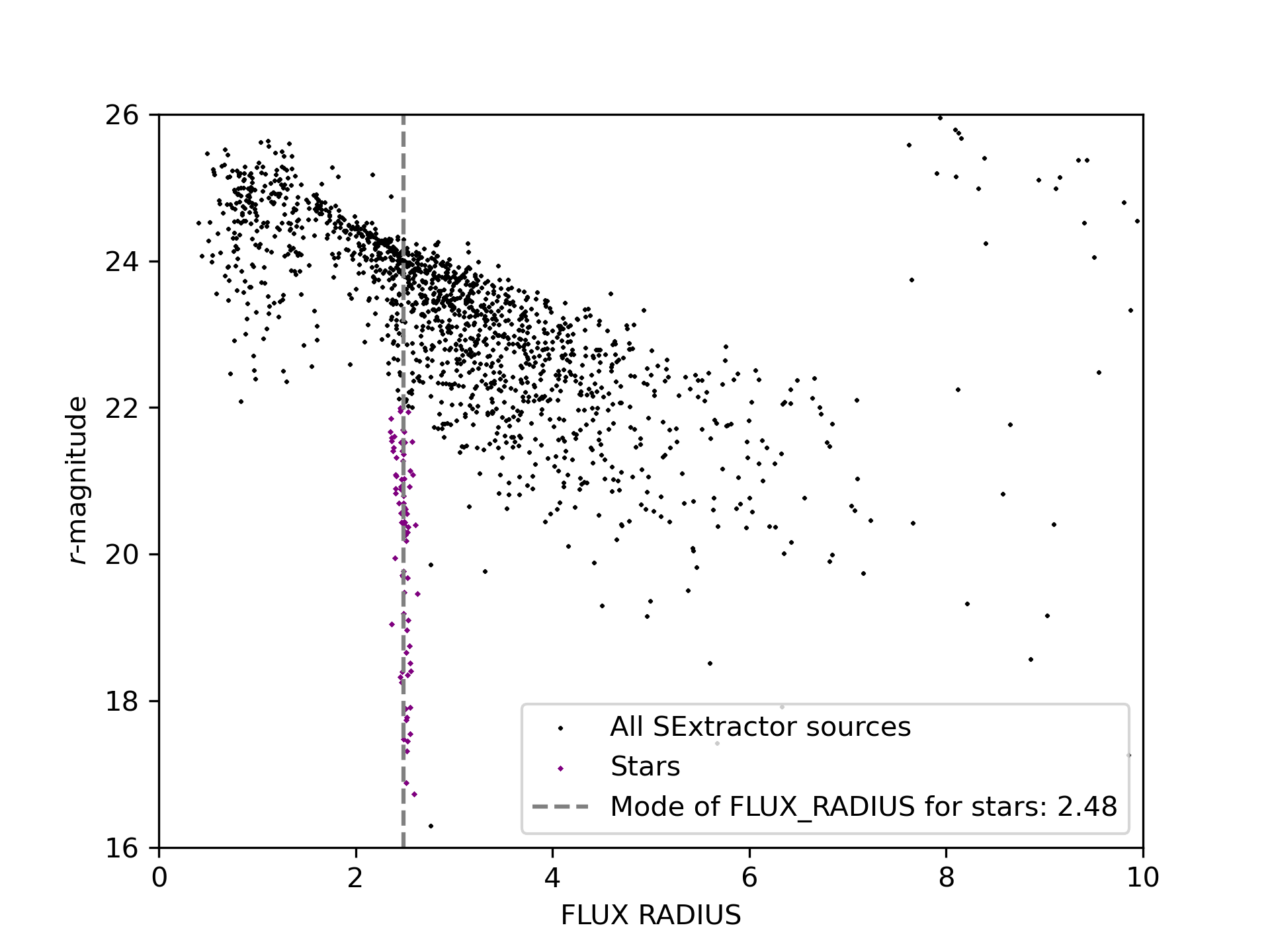
- Size-magnitude distribution of SExtractor detections on a tile. Violet points are selected stars along the stellar locus.
Backup slides: star selection
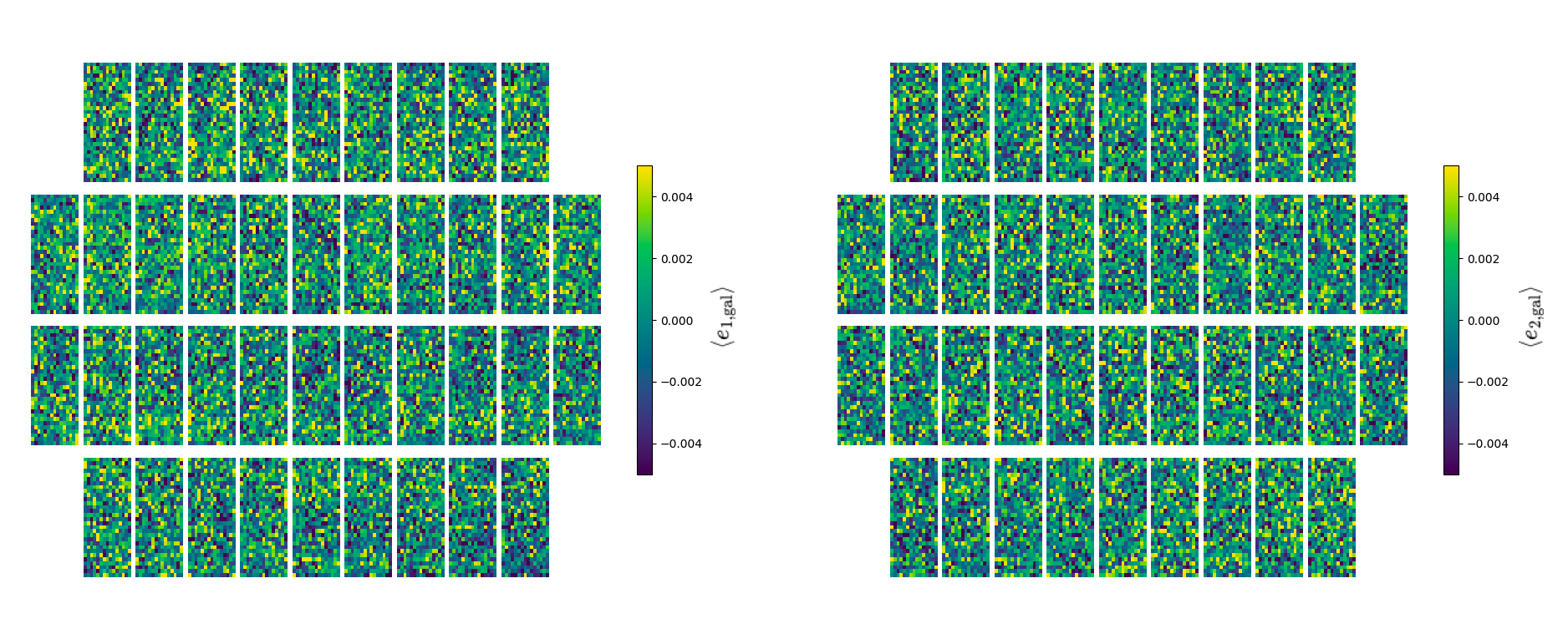
- Mean ellipticities of the selected galaxies in the MegaCam focal plane. No significant structure on the focal plane.
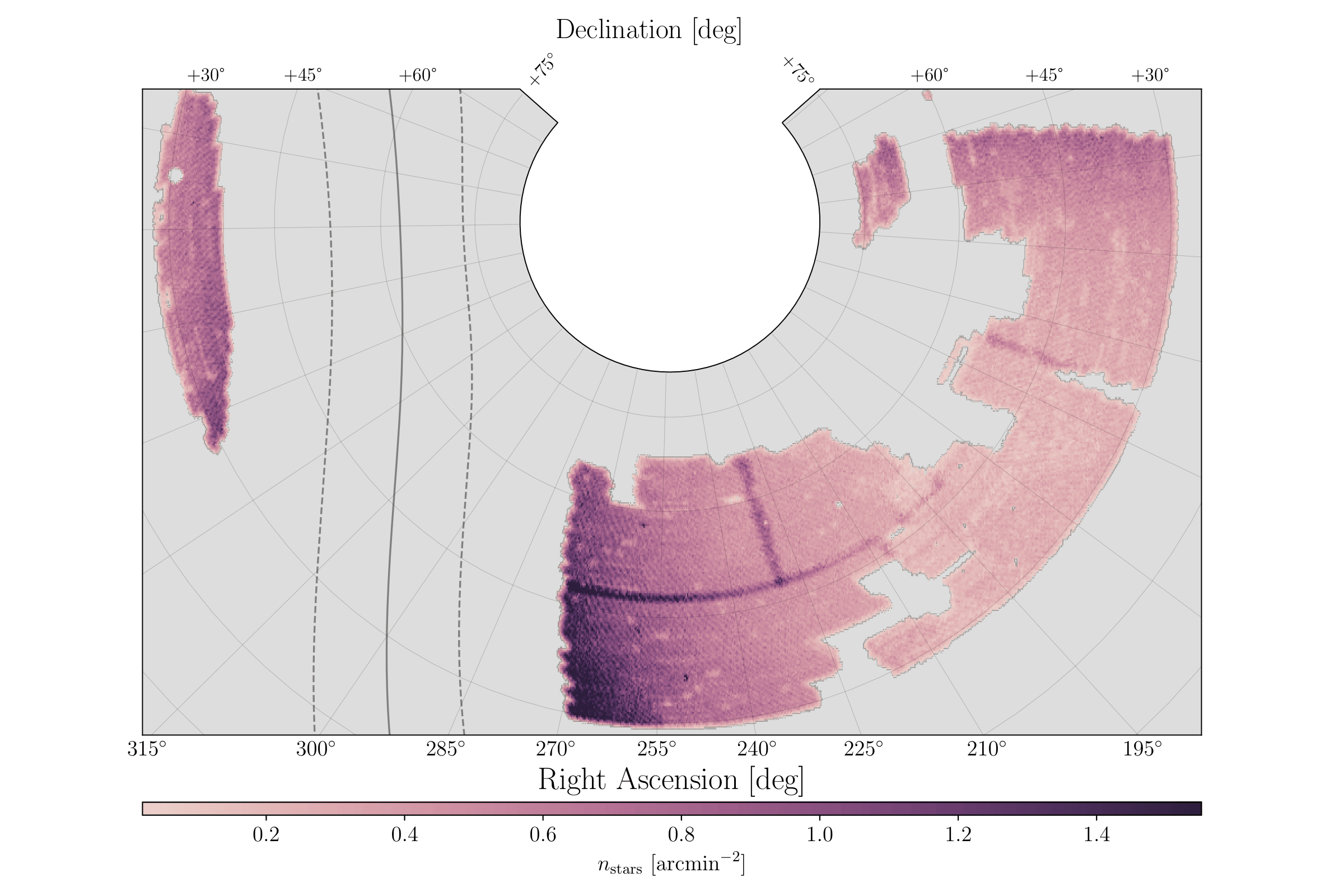
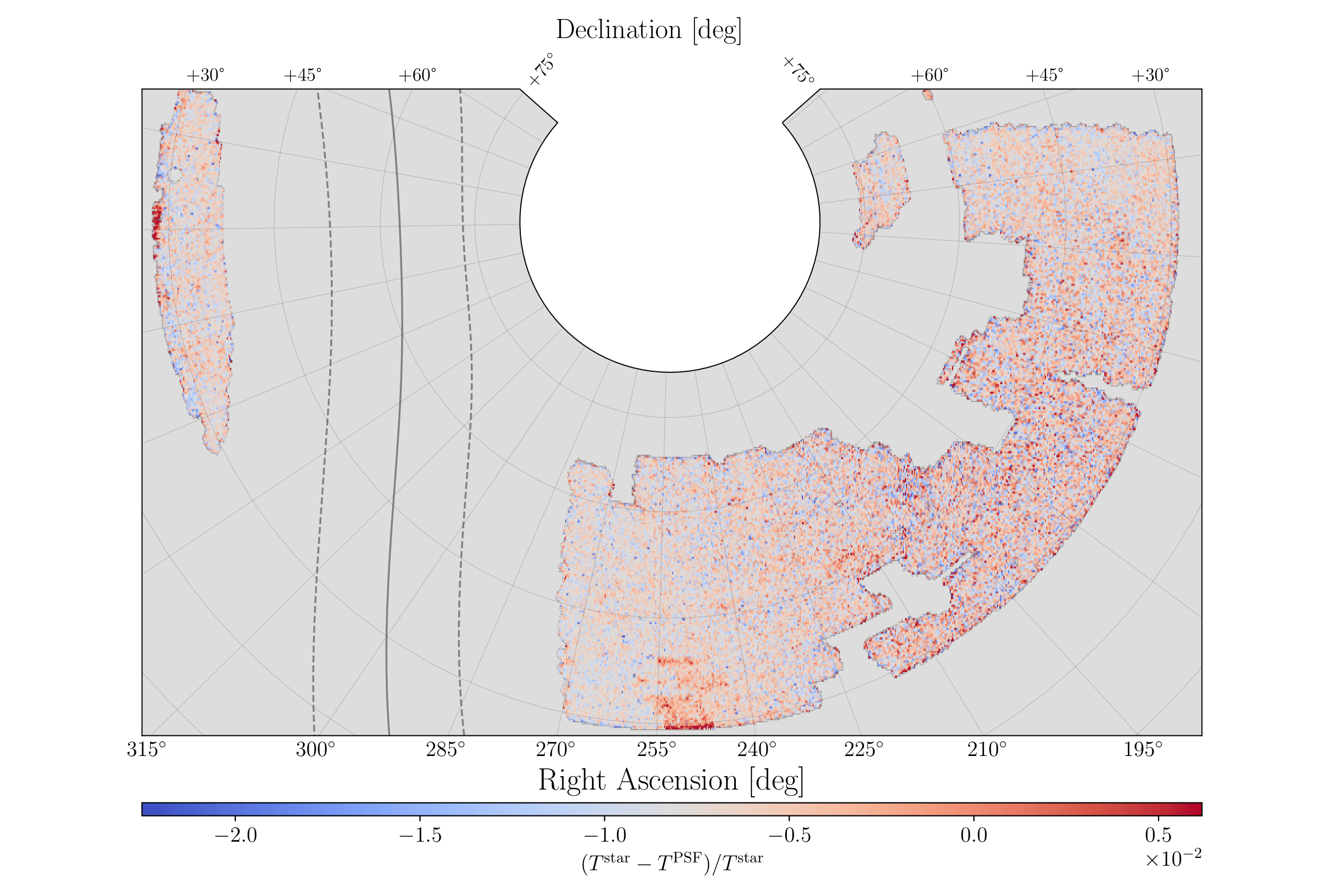
Backup slides: systematic maps
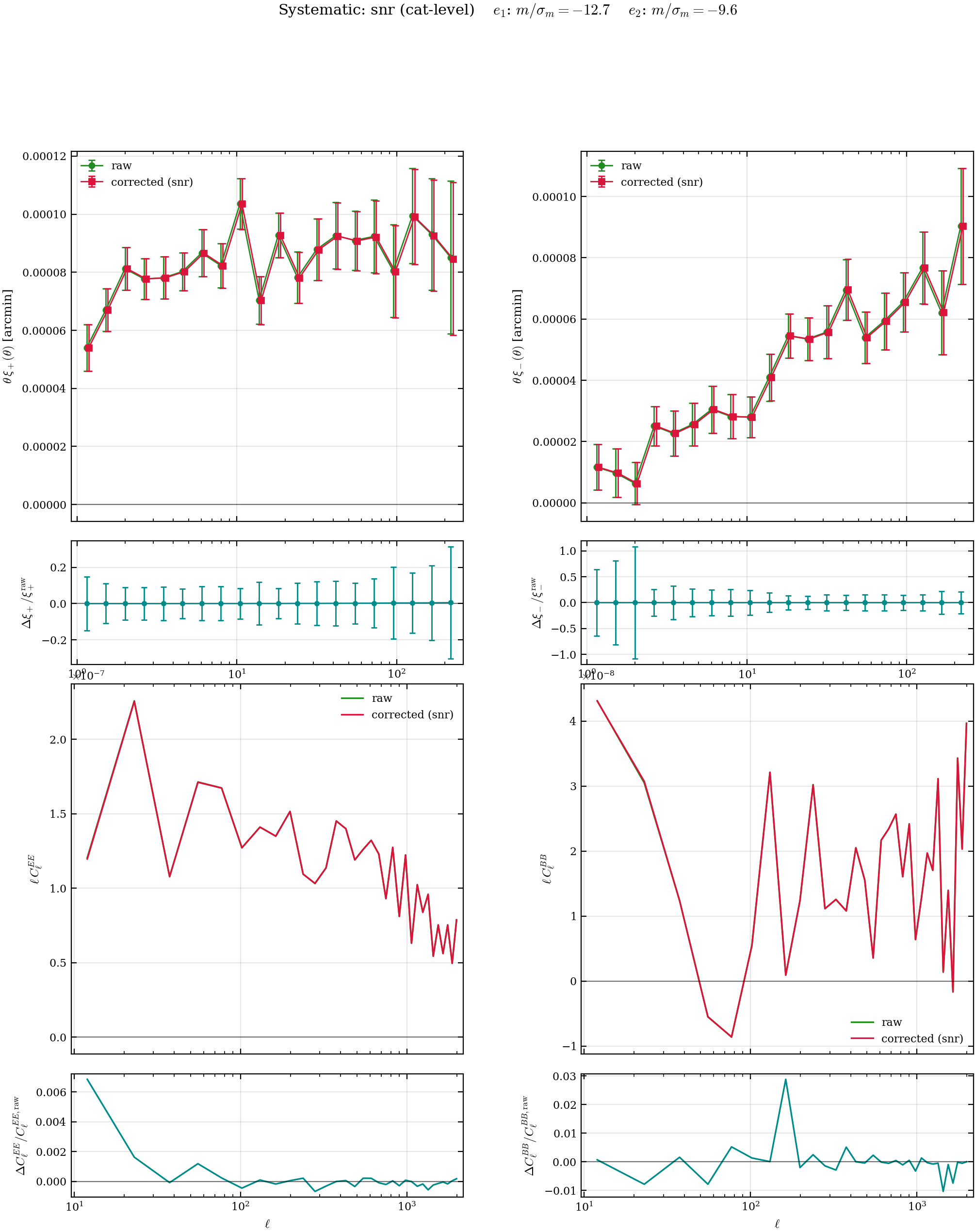
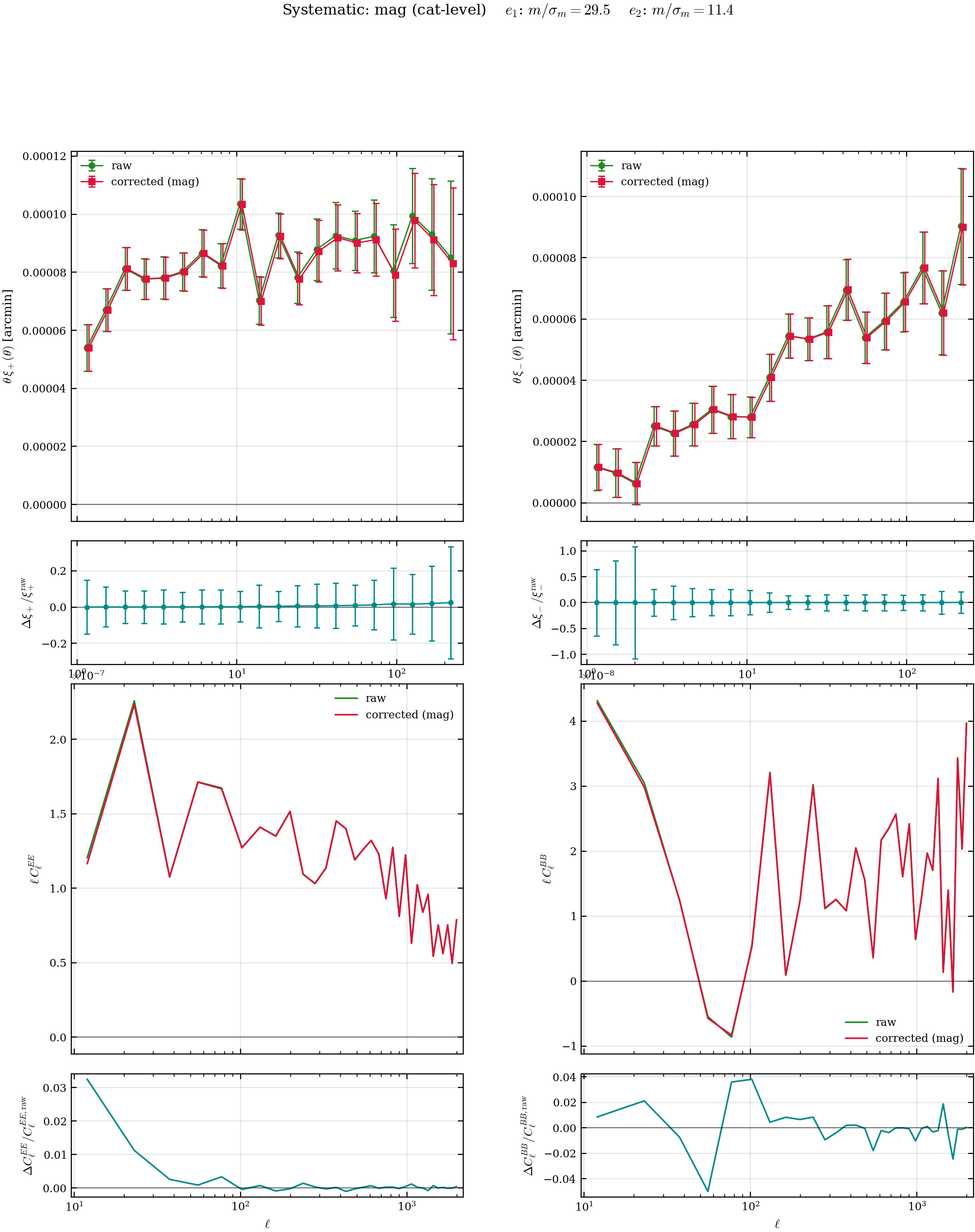
Backup slides: systematic deprojection
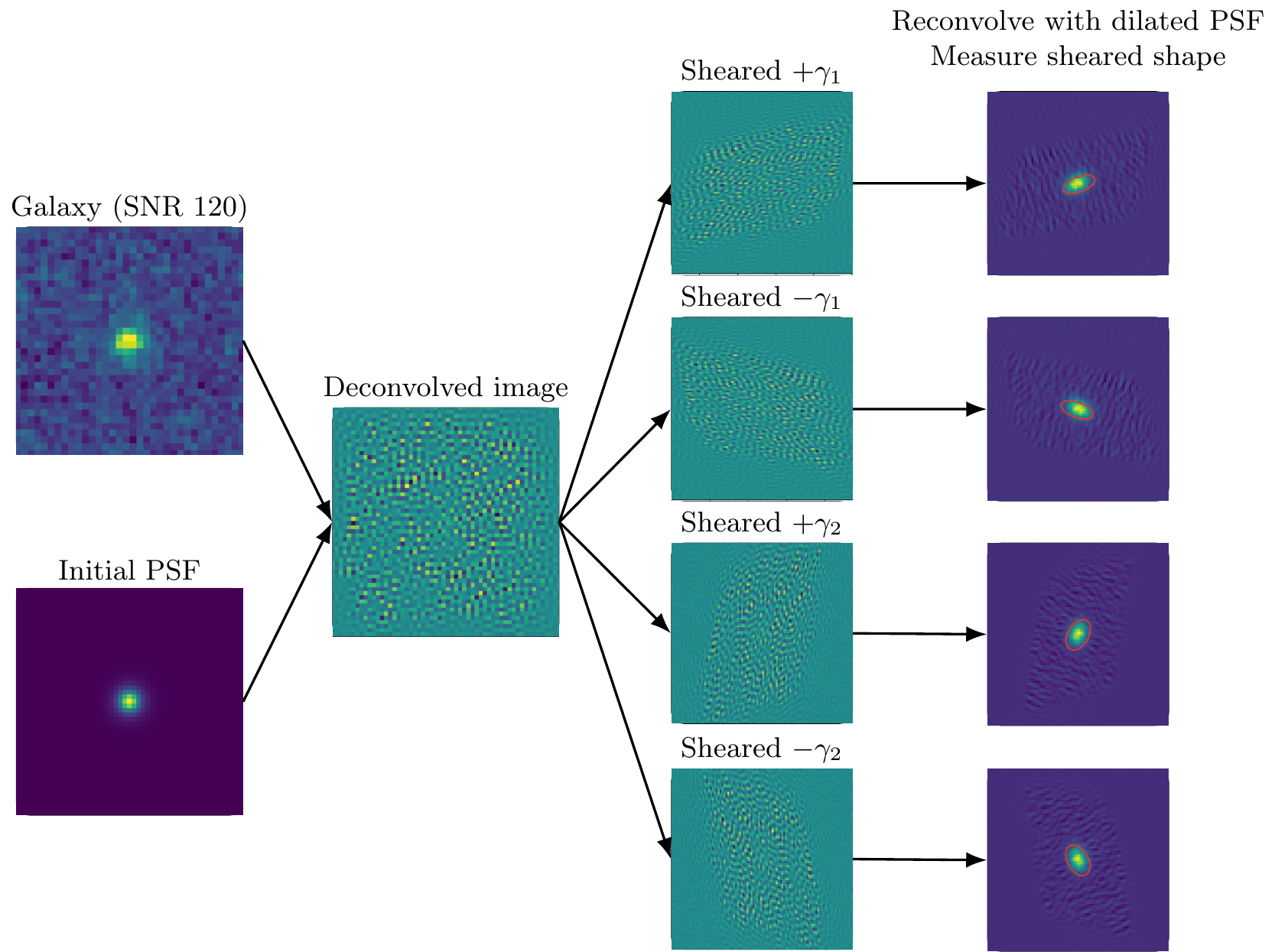
Backup slides: noise bias in shape measurement